
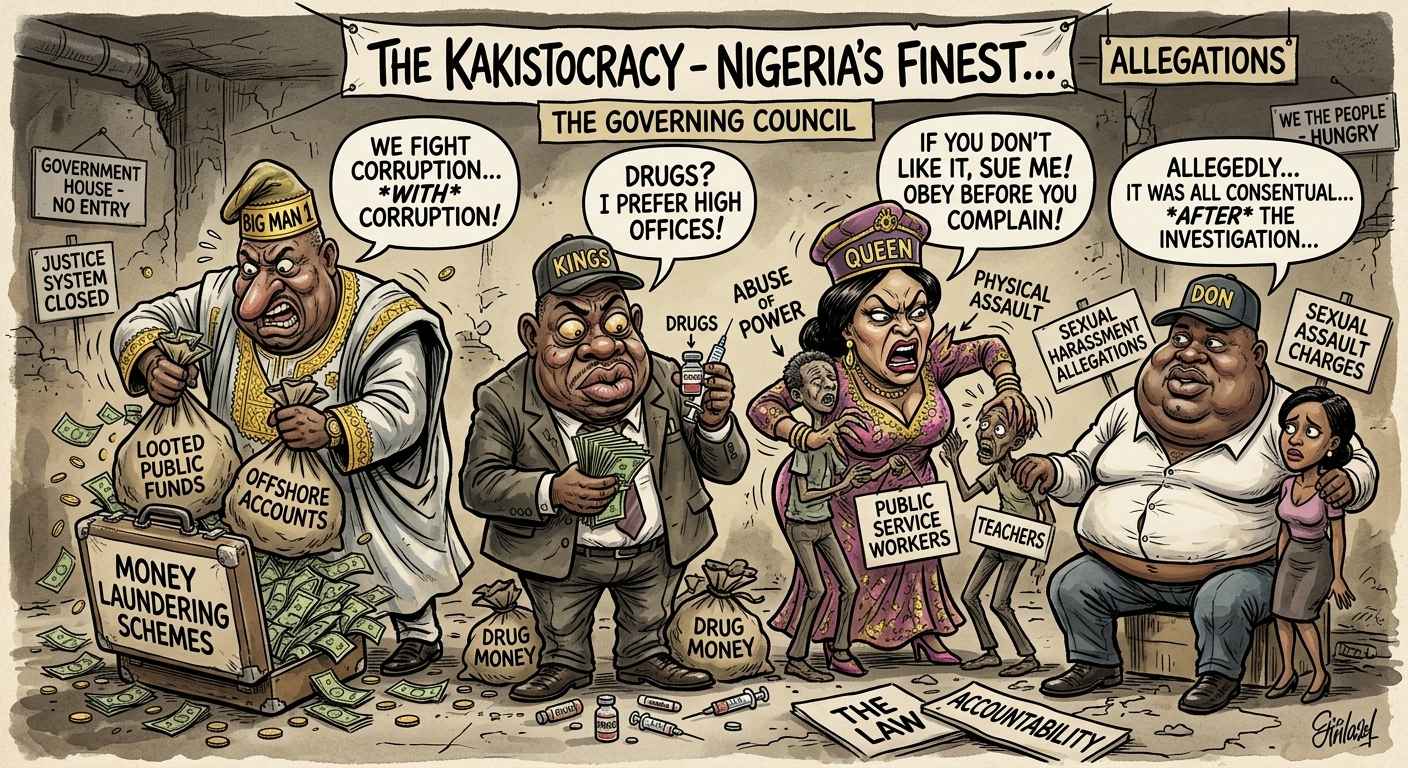
Is Nigeria a Kakistocracy? We Ran the Résumés. The Answer Is Uncomfortable.
Kakistocracy is an old word for a simple idea: government by the worst, least qualified, or most unscrupulous citizens available. It sounds like an insult until you start reading actual court records, actual disciplinary rulings, and actual transcripts of what Nigeria’s most powerful people have said on camera. Then it stops sounding like an insult and starts sounding like a job description. This article does not accuse anyone of anything a court has not already said. It simply asks: given everything already on the public record, is Nigeria a kakistocracy, and if so, whose signature is on that arrangement?
Every democracy has scandals. What separates a functioning one from something closer to kakistocracy is what happens after the scandal breaks. Does the person lose the office, or does the office simply absorb the scandal and continue? In Nigeria, the pattern has become so consistent that it deserves a name more precise than corruption. Is Nigeria a democracy in the fullest sense, or has it evolved into something else entirely, a system where the ballot exists, the elections happen, the courts convene, and yet the same documented pattern of unfit, unresolved, unaccountable figures keeps arriving at the top regardless of who wins? This article walks through the paper trail of the people currently governing Nigeria, not rumours, not tribal gossip, but court records, disciplinary rulings, and their own recorded words.
Is Nigeria a Kakistocracy When Even the President’s Paperwork Cannot Be Verified?
Bola Ahmed Tinubu, GCFR
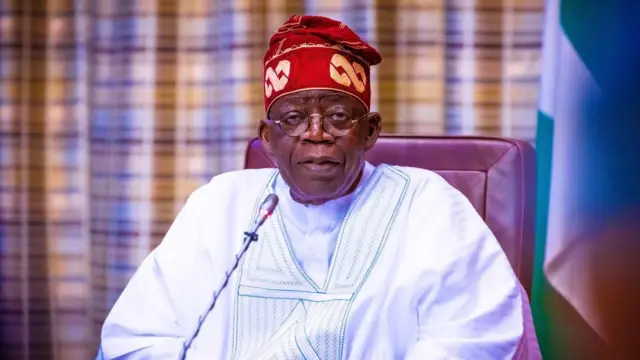
The allegation is not new, but it has resurfaced ahead of 2027, and it deserves to be stated with precision. Following the 2023 election, Atiku Abubakar’s legal team pursued a subpoena in the United States District Court for the Northern District of Illinois, seeking Chicago State University’s records regarding the certificate Tinubu submitted to INEC. At a September 2023 hearing before Judge Jeffrey Gilbert, CSU’s own lawyer, Michael Hayes, told the court under oath: “Is the diploma authentic or is it a forgery? My client can’t answer yes to either of those questions.” That statement, from the university’s own counsel, directly contradicted CSU’s earlier public assertion that it had issued Tinubu a certificate after his 1979 graduation. When CSU eventually released documents under court order, Daily Trust confirmed discrepancies within the record itself, including a document listing Tinubu’s gender and birth year inconsistently with his other submitted paperwork. Nigerian courts, including the Supreme Court, ultimately dismissed Atiku’s petition to nullify the election on this and other grounds, ruling the evidence did not meet the required threshold. The allegation was formally litigated and rejected. It was not, however, definitively resolved to the satisfaction of the university’s own legal counsel, and questions have persisted into 2026.
In August 2026, former Senator Dino Melaye reignited the matter, pointing to Tinubu’s 2027 nomination forms filed with INEC. Melaye posted: “See what Tinubu submitted to INEC, no primary, no secondary school, no Nigerian classmate.” This is the origin of the quote referenced in northern Nigerian political discourse this year, that Tinubu is, in Melaye’s framing, the only Nigerian president without an identifiable classmate. Whatever one makes of Melaye as a messenger, and this article will get to that shortly, the underlying documentary gaps he is pointing at are not invented. They were confirmed in a US courtroom, under oath, by the university’s own lawyer.
Democratic Kakistocracy in Nigerian Polity: When the Accuser Has His Own File
Here is where is Nigeria a kakistocracy stops being a question about one man and becomes a question about the entire cast. Dino Melaye, former senator representing Kogi West and a fixture of Nigerian political theatre for over a decade, built his own reputation on a foundation just as contested as the one he criticises in Tinubu. Melaye’s own academic claims, that he holds a master’s degree from the University of Abuja and another from the London School of Economics, were publicly disputed by SaharaReporters, prompting Melaye to file a N5 billion defamation suit rather than produce definitive documentation that settled the matter. On the Senate floor in 2018, Melaye directed threatening, sexually charged remarks at Senator Oluremi Tinubu, telling her, according to widely reported transcripts, that he would “beat her up” and that consequences would not follow. He was also photographed in past years alongside Ramon “Hushpuppi” Abbas, the Nigerian internet fraudster later convicted in a United States federal court and sentenced to prison for a $24 million business email compromise scheme, both men dressed in matching designer outfits at social events, images that resurfaced repeatedly once Hushpuppi’s arrest became global news. Melaye has denied any business relationship with Hushpuppi, describing the photographs as incidental social encounters.
This is the uncomfortable arithmetic of Nigerian political criticism: the loudest voices calling out the establishment frequently carry establishment-sized baggage of their own. It does not disprove what Melaye alleges about Tinubu’s certificate, since the US court record stands independently of Melaye’s own credibility. But it illustrates precisely why the term kakistocracy fits Nigeria’s political culture more broadly than any single figure. The bench of credible, unblemished critics is not deep, because the pool from which Nigerian political figures are drawn was never filtered for that quality in the first place.
The man accusing the president of a fake certificate has his own unresolved certificate questions and matching outfits with a convicted international fraudster. This is not a scandal. This is the entire roster.
Anuoluwa Soneye, NarrivonNigeria’s Guided Democracy or Kakistocracy: The Chief of Staff With a Georgia Court Ruling
Femi Gbajabiamila
Unlike most allegations in Nigerian politics, this one is not a matter of dispute. It is a matter of court record. The Supreme Court of Georgia, Case No. S06Y0829, ruled on February 26, 2007, that Gbajabiamila accepted a $25,000 personal injury settlement on behalf of a client in January 2003, deposited it into his attorney trust account, then withdrew the funds for personal use, closed his practice, and left the country. He was suspended from practising law for 36 months. He repaid the $25,000 in 2006, a year before the ruling, in order to secure lighter discipline. His Georgia bar licence was later administratively terminated in July 2020. He has not, to this article’s knowledge, publicly disputed the underlying facts of the Georgia ruling itself.
As we documented extensively in our coverage of the PFIPC fake agency saga, Gbajabiamila now sits at the centre of a fresh, unresolved controversy involving allegations from Adeniyi Adeyemi that he sought a share of a fraudulent agency’s take-off funds, allegations Gbajabiamila denies in full and has threatened a N10 billion defamation suit over. Whether those specific 2026 allegations hold up is genuinely unresolved and this article makes no claim either way. What is not unresolved is the 2007 Georgia court finding. A man with a documented, adjudicated client-fund conversion in his professional history now serves as the President’s most trusted institutional gatekeeper. That is not an allegation. That is a certified court judgment sitting in the Supreme Court of Georgia’s own records.
Kleptocracy, Plutocracy, or Kakistocracy: The Wider Bench of Nigeria’s Political Class
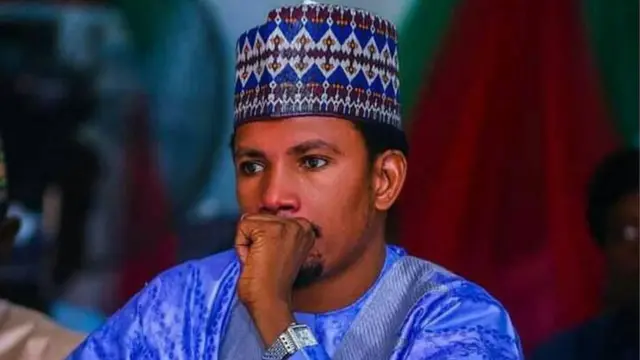
The pattern extends well beyond two men. Senate President Godswill Akpabio faces an unresolved N108 billion probe from his tenure as Akwa Ibom governor and, in 2025, Senator Natasha Akpoti-Uduaghan publicly alleged he made repeated unwanted advances toward her, saying he told her he would “create time for us to come spend quality moments here,” an allegation Akpabio denies. FCT Minister Nyesom Wike was filmed calling a uniformed naval officer “a very big fool” during a land dispute, conduct former Army Chief of Staff Buratai publicly condemned as a threat to institutional order. Former Senator Elisha Abbo was caught on CCTV assaulting a woman at an adult store in Abuja in 2019, footage that went viral nationally, though the criminal charges were later controversially dismissed.
Former Kogi Governor Yahaya Bello faces 19 counts over an alleged N80.2 billion diversion, including reported evidence that N760,000 (approximately $760,000 as reported in the underlying case documents) in school fees for his children were paid in advance in dollars, and was subsequently cleared by his party to contest for the Senate. Minister of Works David Umahi, in a January 2026 political address, declared: “I am ten times bigger than when I was governor. I am very dangerous now. God has blessed the Umahi family beyond wealth, and we are capable of funding anything.” This is not an allegation. This is a sitting federal minister describing himself, unprompted, as dangerous, at a public gathering, while discussing his capacity to fund political outcomes.

Is Nigeria a Kakistocracy by Design? How Patronage Outweighs Competence at Every Level
None of this happens by accident. Political scientists studying Nigeria’s post-1999 democratic era have consistently pointed to a structure where ethnic identity, godfather patronage, and campaign financing outweigh professional competence and clean records at nearly every stage of candidate selection. The Oshiomhole doctrine, “once you join the APC, all your sins are forgiven,” is not a joke. It is a documented, functioning selection mechanism that has moved multiple scandal-carrying figures out of active EFCC scrutiny and into safe political harbours. This is kleptocracy, rule by those who steal, dressed as democracy. It is also plutocracy, rule by wealth, since Umahi’s own boast rests explicitly on financial capacity rather than policy competence. Layer those two dynamics together and you get something closer to a hybrid: a system that filters for wealth and loyalty rather than merit and record, and calls the result an election.
“The people who cast the votes decide nothing. The people who count the votes decide everything.”
Widely attributed to Joseph Stalin, cited in discussions of electoral malpractice
As we documented in our analysis of the Electoral Act 2026, the legislative machinery governing Nigeria’s elections is itself written by the people who benefit from its loopholes. Chronic insecurity, infrastructure collapse, and economic mismanagement persist regardless of which administration holds office, because the underlying selection mechanism producing each administration has not changed. This is the strongest evidence for describing Nigeria as something closer to a kakistocracy than a functioning meritocratic democracy. The problem is not one president or one Chief of Staff. It is a reproducible system that keeps generating the same category of leader.
Is Nigeria a Kakistocracy Forever, or Only Until Citizens Demand Something Else?
This article has not invented a single fact. A US court’s own lawyer said he could not authenticate the president’s certificate. A US state supreme court disbarred the president’s Chief of Staff for stealing client money. A federal minister called himself dangerous, on camera, while discussing his capacity to fund political outcomes. A senator has an unresolved sex toy shop assault case. These are not opinions. They are records, rulings, and transcripts, sitting in plain public view, largely unaddressed by the institutions meant to act on them.
As we have argued in our broader examination of empathy and merit in Nigerian leadership, the standard Nigerians apply when selecting leaders determines the caliber of leader Nigeria gets. A kakistocracy does not sustain itself. It requires an electorate exhausted enough, distracted enough, or divided enough along ethnic and religious lines to keep returning the same category of candidate to power. At Narrivon, we believe the Nigeria of our dreams requires citizens who do right, think right, act right, and speak up loudly enough that a US court’s disciplinary ruling against a sitting Chief of Staff becomes disqualifying rather than trivia. It requires refusing to let “once you join the party, your sins are forgiven” remain the operative rule of Nigerian political life. The paperwork already tells us who is currently governing Nigeria. What happens next depends entirely on whether citizens decide that paperwork should matter.
Frequently Asked Questions About Whether Nigeria Is a Kakistocracy
What does kakistocracy mean and why is it applied to Nigeria?
Kakistocracy refers to government by the worst, least qualified, or most unscrupulous citizens in a state. The term is applied to Nigeria by critics pointing to the documented pattern of senior officials with unresolved scandals, disciplinary rulings, or serious allegations continuing to hold or gain power, including a president whose certificate a US university lawyer could not authenticate under oath, and a Chief of Staff formally disbarred by a US state supreme court for stealing client funds.
What is the status of the Tinubu certificate controversy?
Following the 2023 election, Atiku Abubakar’s legal team subpoenaed Chicago State University’s records regarding President Tinubu’s certificate. In September 2023, CSU’s own lawyer told a US federal court he could not confirm whether the diploma was authentic or forged. Discrepancies, including a gender and birth year inconsistency, were confirmed in released documents. Nigerian courts, including the Supreme Court, dismissed Atiku’s petition to nullify the election on this and other grounds, ruling the evidence insufficient. Former Senator Dino Melaye revived the issue in August 2026 ahead of the 2027 election cycle.
What happened with Femi Gbajabiamila and the Georgia Bar Association?
The Supreme Court of Georgia, in a ruling dated February 26, 2007 (Case No. S06Y0829), found that Femi Gbajabiamila, then a practising attorney in Atlanta, accepted a $25,000 personal injury settlement on a client’s behalf in January 2003, deposited it into his trust account, and withdrew it for personal use before closing his practice and returning to Nigeria. He was suspended from practising law for 36 months and repaid the funds in 2006. His Georgia bar licence was administratively terminated in July 2020. He now serves as Chief of Staff to President Tinubu.
What did David Umahi mean when he called himself dangerous?
Minister of Works David Umahi, speaking at a political gathering in January 2026, said: “I am ten times bigger than when I was governor. I am very dangerous now. God has blessed the Umahi family beyond wealth, and we are capable of funding anything.” The comment, made while urging supporters to bring their needs to him, was widely circulated and drew public commentary about the use of financial power in Nigerian political influence.
Sources and Further Reading:
US court adjourns Atiku records case as Chicago university denies knowledge of certificate (Peoples Gazette, September 2023) •
Birthday mismatch, gender error, unanswered questions as CSU releases Tinubu’s certificate (Daily Trust, October 2023) •
Melaye questions Tinubu’s credentials (Daily Post, August 2026) •
Gbajabiamila was found guilty by Supreme Court of Georgia (SaharaReporters) •
US legal panel terminates Gbajabiamila’s law licence (Peoples Gazette) •
I’m dangerous now, ten times bigger than when I was governor, Umahi (Daily Post, January 2026) •
How $760,000 school fees were paid in advance for Yahaya Bello’s children (Premium Times)