
Leaders in Nigeria and the One Ingredient Missing From Almost Every Recipe: Empathy
In March 2024, Governor Alex Otti signed a law scrapping pension payments to former governors and deputy governors of Abia State, calling the practice unnecessary and something government should never have normalised. Around the same period, senators elsewhere were publicly defending the purchase of luxury SUVs using the country’s bad roads as justification, while ordinary Nigerians absorbed the full weight of a fuel subsidy removal they were told was necessary sacrifice. Two very different definitions of leadership were on display in the same country, in the same season. Only one of them included empathy as an ingredient.
There is a specific test that separates good leaders in Nigeria from the merely powerful ones, and it has nothing to do with eloquence, tribe, age, or how many years someone has spent in government. The test is simple. When resources are scarce and sacrifice is required, does the leader’s own comfort get examined first, or last? Most Nigerian leaders examine it last, if at all. A smaller number, and Governor Alex Otti of Abia State belongs firmly in this smaller number, examine it first. This article is about that difference, why it matters more than almost any other leadership quality Nigerians currently debate, and why the country keeps choosing the wrong criteria when it selects the people meant to lead it.
Alex Otti and the Empathy That Scrapped a Pension Nobody Wanted to Talk About
Dr Alex Chioma Otti, OFR
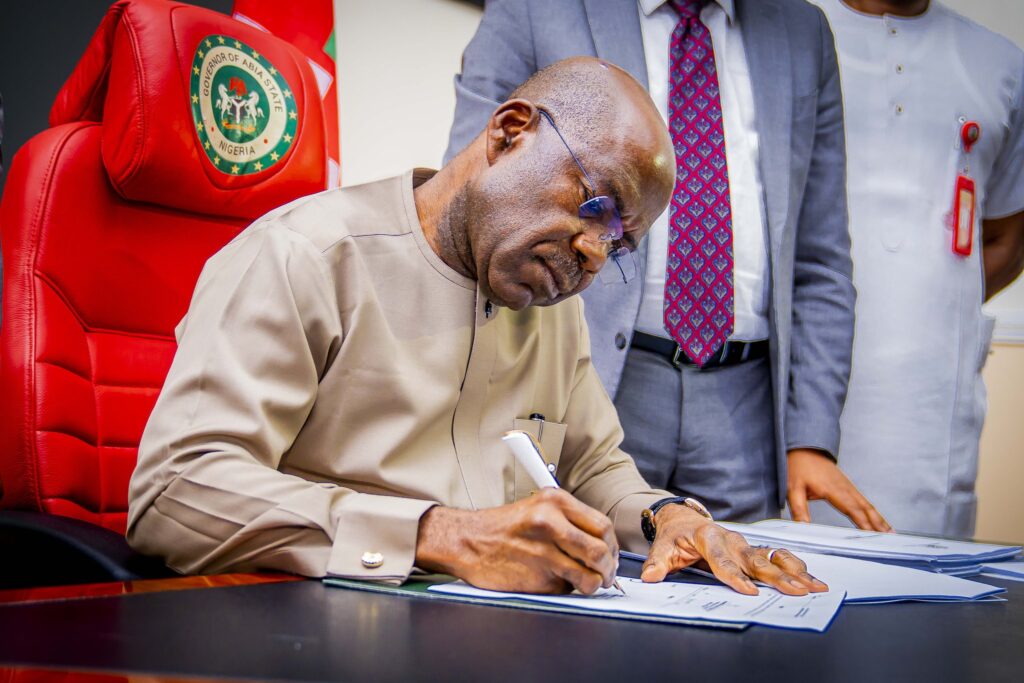
On March 21, 2024, Alex Otti signed into law the Abia State Governors and Deputy Governors Pensions (Repeal) Law, 2024, a bill that revoked a 2001 law which had entitled former governors and their deputies to lifetime pensions and allowances funded by the same state treasury that struggles to pay ordinary retired civil servants. Otti explained, after assenting to the bill, that he believed from the onset the practice should never have continued, noting that the money would have been better used to offset the backlog of pensions owed to ordinary Abia retirees since 2014. He described leadership as stewardship rather than an opportunity to embezzle public funds, adding pointedly: “if you now want to take up all the resources that belong to the people you are leading, I’m not sure that qualifies as leadership.” Remarkably, this was a law Otti himself would eventually benefit from as a former governor. He scrapped his own future entitlement, in office, in real time, on camera.
Consider what this actually means in practical terms. Under the repealed law, a former governor of Abia State was entitled to a furnished residence, vehicles replaced periodically, domestic staff, medical care abroad, and a monthly pension, all funded indefinitely by a state government that has struggled for years to clear a backlog of pensions owed to teachers, civil servants, and local government workers who spent entire careers in actual service. Alex Otti did not simply criticise this arrangement from the sidelines. He held the pen that could end it, and he used it. This is what empathy looks like when it is not a campaign slogan but an actual governing decision with a signature attached to it.
Nigerian Leaders and the Sacrifice That Somehow Never Reaches the Top
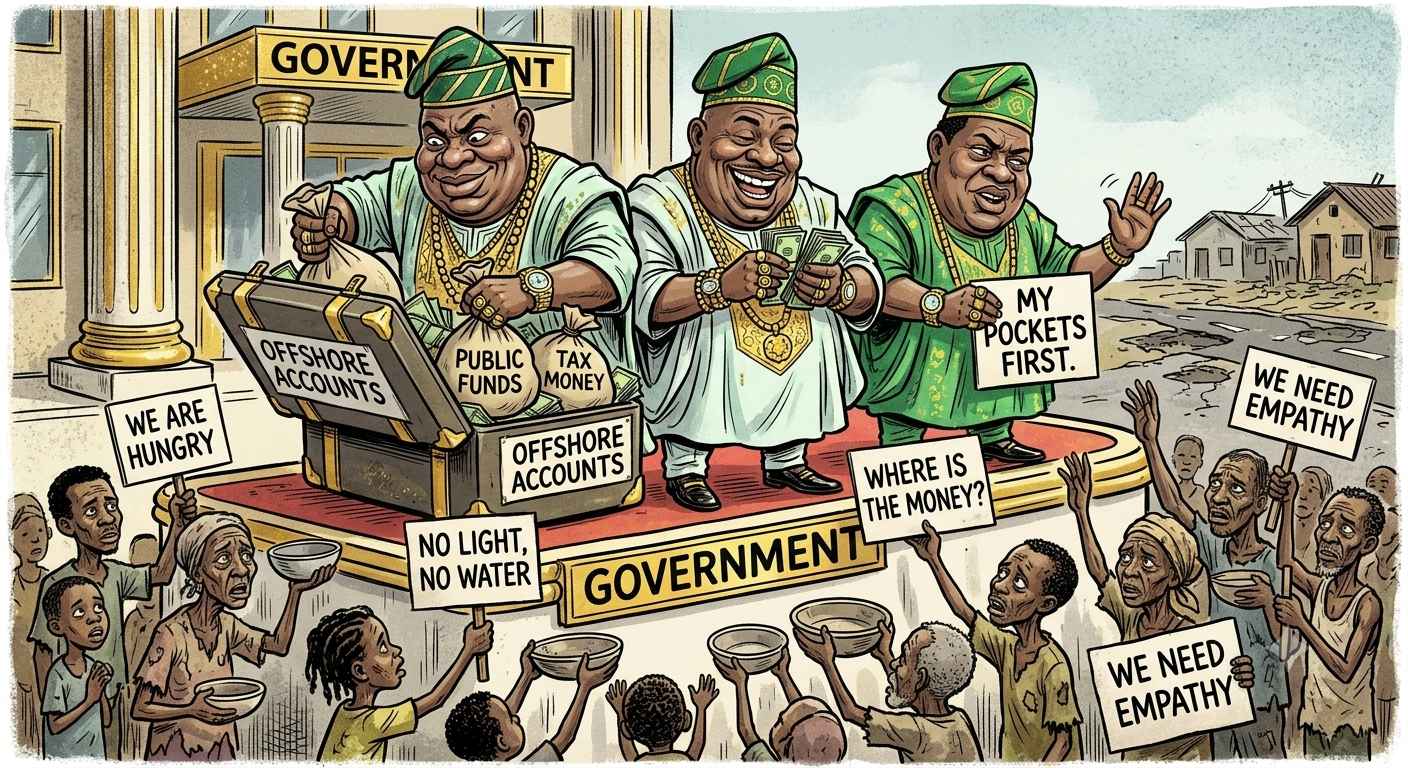
Compare this against the dominant national script. Since 2023, Nigerians have absorbed the removal of the fuel subsidy, adjustments to foreign exchange policy, and a documented rise in the cost of nearly everything, from transport to food to electricity. President Tinubu has repeatedly framed these reforms as necessary sacrifice, asking Nigerians directly to endure a little more for the sake of a better tomorrow. This framing is not inherently dishonest. Difficult economic reforms genuinely do sometimes require shared discomfort in the short term to produce long term stability. The problem is the word “shared.” The sacrifice asked of ordinary Nigerians has been extensive, immediate, and painfully visible in every market queue and every fuel station line. The sacrifice asked of Nigeria’s political class, by contrast, has been largely rhetorical.
While subsidies meant to cushion the poorest Nigerians were being withdrawn, the National Assembly was separately defending its own procurement of luxury vehicles for members. In October 2023, the Senate justified the purchase of luxury vehicles for its members by pointing to Nigeria’s bad roads, with a spokesperson noting that ministers typically enjoy more than three SUVs each and other government officials receive comparable vehicle allocations. Read that justification again. The roads are bad, largely because of decades of underinvestment by the same class of officials now citing that badness as the reason they personally require better vehicles than the citizens navigating those same roads in considerably less comfort. This is not merely tone deaf. It is the precise inversion of the empathy Otti demonstrated. Where Otti looked at an entitlement and asked whether it was necessary, this pattern looks at scarcity and asks how to be comfortable within it, rather than how to fix it for everyone.

Nigerians were told to sacrifice for a better tomorrow while the National Assembly explained why bad roads meant its members needed better vehicles. If leadership meant anything close to empathy, the savings would have started at the top, not the bottom.
Anuoluwa Soneye, NarrivonEmpathy in Leadership Means Looking at What It Costs to Keep the Comfortable, Comfortable
The structure built to sustain Nigeria’s political class is extensive and largely insulated from the economic conditions the rest of the country absorbs directly. Senators and members of the House of Representatives receive substantial constituency and running cost allowances on top of basic salaries, alongside vehicle procurement, generous severance packages, and, in several states, the same category of lifetime pension arrangements Otti chose to eliminate in Abia. As we have documented extensively in our coverage of Nigeria’s political leadership, this structure persists largely untouched even as ordinary government workers wait months for salary payments and pensioners in multiple states are owed years of unpaid entitlements. The argument here is not that public officials should receive nothing. It is that Nigerian leaders asking citizens to sacrifice while quietly preserving every comfort of their own office have failed the single most basic test of empathetic leadership: examining your own position before asking someone with far less to give up more.
As we detailed in our breakdown of the true cost of corruption in Nigeria, every naira spent maintaining excessive comfort for a small political class is a naira unavailable for the roads, hospitals, and pensions that would have made subsidy removal genuinely bearable for the people absorbing its full weight. Empathy in leadership is not a soft, sentimental quality separate from serious governance. It is, in fact, a governance decision with a measurable fiscal footprint, exactly as visible in a budget line as any other policy choice a leader makes.
Who Are Good Leaders in Nigeria, and Why Do We Keep Overlooking Them for the Wrong Criteria
Part of why good leaders in Nigeria remain the exception rather than the rule is that Nigerians have, for decades, prioritised tribe, religion, age, and perceived experience over the far more predictive question of demonstrated empathy. Voters ask whether a candidate is “one of us” ethnically or religiously, or whether they have “paid their dues” through years in the very political system that has consistently failed to deliver empathetic governance. Rarely does the conversation centre on the much simpler, much more testable question: has this person, in any position of authority they have previously held, shown a willingness to sacrifice their own comfort for the people under their care? As we explored in our examination of the Olodo Uprising debate, Nigeria’s cultural drift toward valuing visibility, tribal loyalty, and raw ambition over demonstrated character and values extends directly into how the country selects its political leadership.
Alex Otti’s profile offers a useful corrective to this pattern. He is a trained economist and former banking CEO, credentials that matter, but credentials alone rarely predict empathetic governance. What predicts it is the specific, demonstrated choice to give something up voluntarily when he did not have to. That is a far more reliable indicator than a résumé, a tribal affiliation, or decades spent inside a political machine that has trained most of its participants to protect its comforts rather than question them. As we have documented extensively in our broader coverage of governance in Abia State under Otti, this pension repeal sits alongside a pattern of similarly empathy-driven decisions, from personally inspecting infrastructure projects to insisting political appointees only receive salaries after ordinary workers are paid first.
Leadership is stewardship. If you now want to take up all the resources that belong to the people you are leading, I am not sure that qualifies as leadership.
Governor Alex Otti, Abia State, March 2024“You manage things, but you lead people. Leadership is not about titles, positions, or flowcharts. It is about one life influencing another.”
John C. Maxwell, leadership author, widely cited
Inspiring Nigerian Leaders Prove Empathy Is Not an Impossible Standard, Only an Uncommon Choice
The value of examples like Alex Otti’s pension repeal is not that they solve Nigeria’s leadership crisis single-handedly. One law in one state, however commendable, cannot repair decades of a political culture built on self-preservation. Its value is proof of possibility. It demonstrates, concretely and on the public record, that a Nigerian governor can look directly at a personal financial benefit, decide it does not serve the people he leads, and eliminate it, without the sky falling and without his own political survival collapsing as a result. It proves the excuse so often offered by other Nigerian leaders, that the system simply does not allow for this kind of sacrifice, was never entirely true. It was, and remains, largely a choice.
This is the standard Nigerians should be applying far more consistently when choosing who governs them. Not simply who promises the most, or who shares your tribe or religion, or who has spent the most years inside government without ever meaningfully questioning its comforts. The standard should be whether a leader has shown, in ways that can be verified rather than merely spoken, a willingness to feel and act on the weight of what ordinary citizens are carrying. As we have written before regarding the broader empathy problem in Nigerian governance, the distance between condolence and presence, between rhetoric and sacrifice, is exactly where genuine leadership reveals itself.
At Narrivon, we believe the Nigeria of our dreams requires citizens who do right, think right, act right, and have the courage to speak up and demand this specific standard from every leader seeking their vote or their trust. It requires refusing to accept sacrifice rhetoric from leaders who have not first examined their own comforts. It requires asking, plainly and persistently, before every election: has this person ever given something up for the people they claim to serve? Governor Otti answered that question with a signature on a bill that cost him a future pension. The Nigeria of our dreams needs more leaders willing to answer it the same way, and citizens willing to demand nothing less.
Frequently Asked Questions About Empathy in Nigerian Leadership
What did Alex Otti do regarding pensions for former Abia governors?
On March 21, 2024, Abia State Governor Alex Otti signed the Abia State Governors and Deputy Governors Pensions (Repeal) Law, 2024, ending a 2001 law that entitled former governors and deputy governors to lifetime pensions, furnished accommodation, and other allowances funded by the state. Otti described the practice as unnecessary and stated that the funds would be better used to clear a backlog of pensions owed to ordinary Abia retirees dating back to 2014. Notably, this repeal eliminated a benefit Otti himself would have eventually received as a former governor.
How does the fuel subsidy removal connect to the empathy gap in Nigerian leadership?
Since 2023, Nigerians have absorbed significant economic hardship following the removal of the fuel subsidy and related foreign exchange reforms, with President Tinubu framing these changes as necessary sacrifice for future stability. Critics point out that while ordinary citizens bore the immediate cost of these reforms, the National Assembly separately defended the procurement of luxury vehicles for its members in October 2023, citing bad roads as justification, illustrating an asymmetry in who is actually asked to sacrifice.
What makes a good leader in Nigeria based on the empathy standard?
Rather than tribal affiliation, religion, age, or years spent in political office, this article argues that demonstrated willingness to personally sacrifice comfort or entitlement for the benefit of the people being led is a more reliable indicator of good leadership in Nigeria. Alex Otti’s decision to eliminate a pension benefit he himself would have received is cited as a concrete, verifiable example of this standard being met in practice rather than merely promised.
Sources and Further Reading:
Abia State Governor signs law to stop pension payment to former governors, deputies (Pension Nigeria) •
Otti signs law stopping ex-governors, deputy govs pension (The Punch, March 2024) •
Gov Otti signs into law bill cancelling pension for ex-Abia governors, deputies (Premium Times, March 2024) •
Otti signs law stripping former Abia governors, deputies of pensions (Daily Post, March 2024) •
Nigerian roads are bad, Senate justifies purchase of luxury vehicles (Instablog9ja, October 2023) •
Tinubu asks Nigerians to sacrifice a little more (Wikki Times) •
Alex Otti (Wikipedia)