
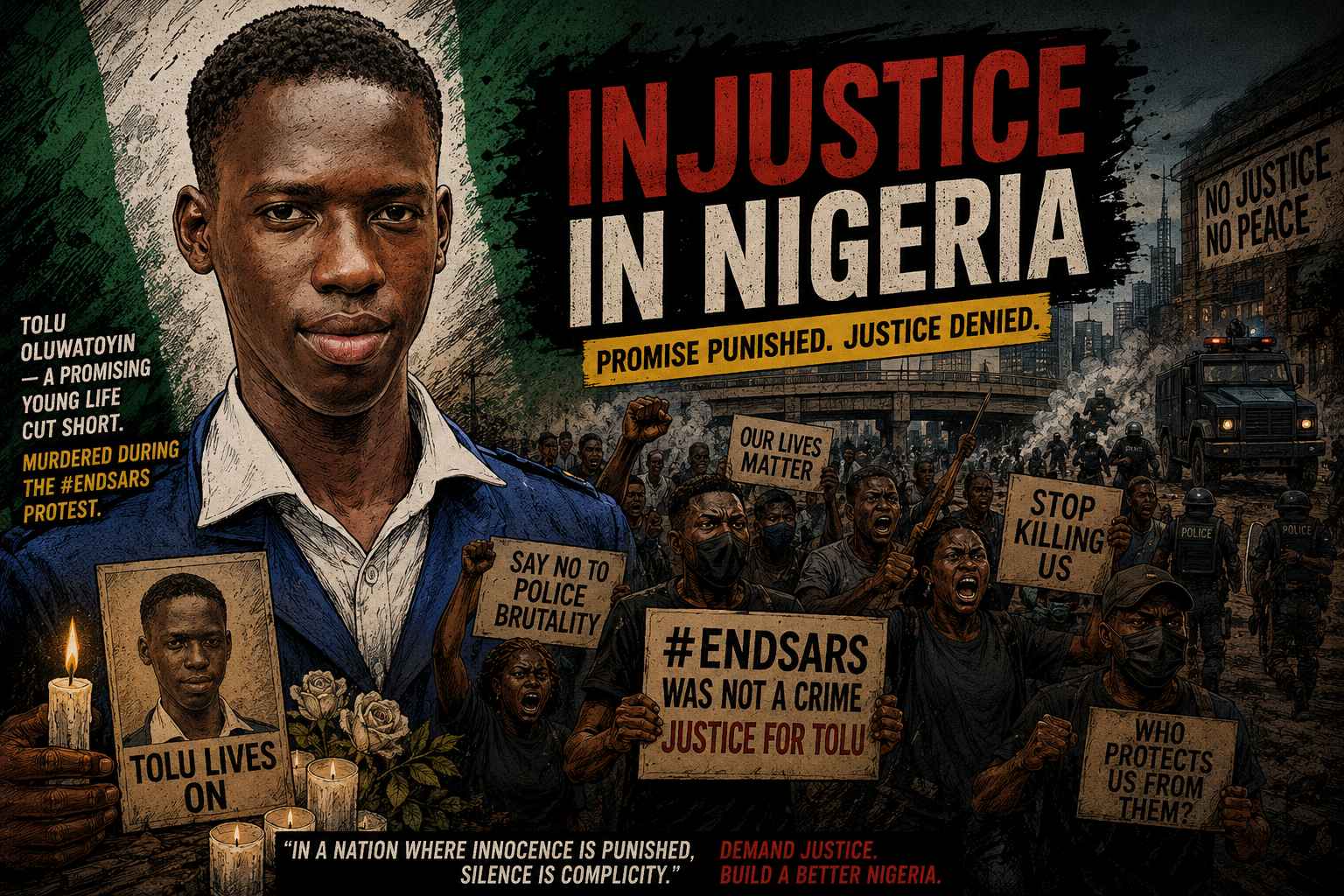
Pelumi Onifade, EndSARS and the Cost of Injustice Nigeria Refuses to Pay
On June 23, 2026, nearly six years after the EndSARS protests, a mother stood in a Lagos courtroom and wept when a sealed DNA report confirmed what she had maintained all along: the unidentified body tagged No. 1385 in the Ikorodu General Hospital mortuary was her son. His name was Pelumi Emmanuel Onifade. He was 20 years old. He was a journalism intern and a history student. He had a camera. He had a story to cover. He was allegedly shot by the police. Nobody has been charged. Nobody has answered. And the man filmed discharging a weapon at the protest scene has not, to date, been publicly prosecuted for it. This is injustice in Nigeria as a biography.
The story of Pelumi Emmanuel Onifade did not begin with a DNA report. It began on October 24, 2020, when a 20-year-old student from Tai Solarin University of Education (TASUED), completing his History degree and interning as a broadcast journalist with Gboah TV, was assigned to cover the EndSARS protests in Agege and Abule Egba, Lagos. He went to do his job. He had a camera. He was documenting events near a government warehouse reportedly storing COVID-19 palliatives. And then something happened to him that the Nigerian state has spent six years doing its best to make difficult to establish: he was allegedly shot and killed by police officers attached to the Lagos State Task Force. His body was allegedly taken away by security operatives. It was deposited, unidentified and unclaimed, at the mortuary of Ikorodu General Hospital, where it sat for six years under tag number 1385. His mother, Mrs Adebose Onifade, went to every institution available to her. His father, Mr Olatunde Onifade, went to every door. The police denied he died in their custody. The state denied knowledge. And the body sat in a mortuary, unnamed, while time did what time in Nigeria is very good at doing: passing.

Abiodun Bolarinwa, the EndSARS Protest, and the Impunity of Shooting Into a Crowd
Olusegun Abiodun Bolarinwa
According to the confirmed Wikipedia account of Pelumi Onifade’s killing, and as reported by The Nation newspaper at the time, Pelumi had been filming at a protest scene in Lagos when he reportedly captured footage of Abiodun Bolarinwa, President of the Yoruba Youth Forum, discharging a firearm. Bolarinwa subsequently gave The Nation newspaper an interview explaining that he shot into the air, not into the crowd, and provided his own account of his reasons. What has not been publicly established, through any formal legal process that concluded with consequence, is why a civilian leader arrived at a protest scene carrying a firearm, who licensed that weapon, under what authority he was present at that location, and what formal accountability process was ever completed regarding his presence and conduct. This is not an accusation of criminal guilt. A court has not said so. But the contrast it draws is a precise illustration of injustice in Nigeria: the young man who was filming with a camera is dead in a mortuary under an anonymous tag number. The man who was filmed with a gun gave a newspaper interview and remained, publicly, unquestioned by the system. The camera was the crime. The gun was apparently explainable.

EndSARS Accountability and the Injustice in Nigeria That Time Is Designed to Erase
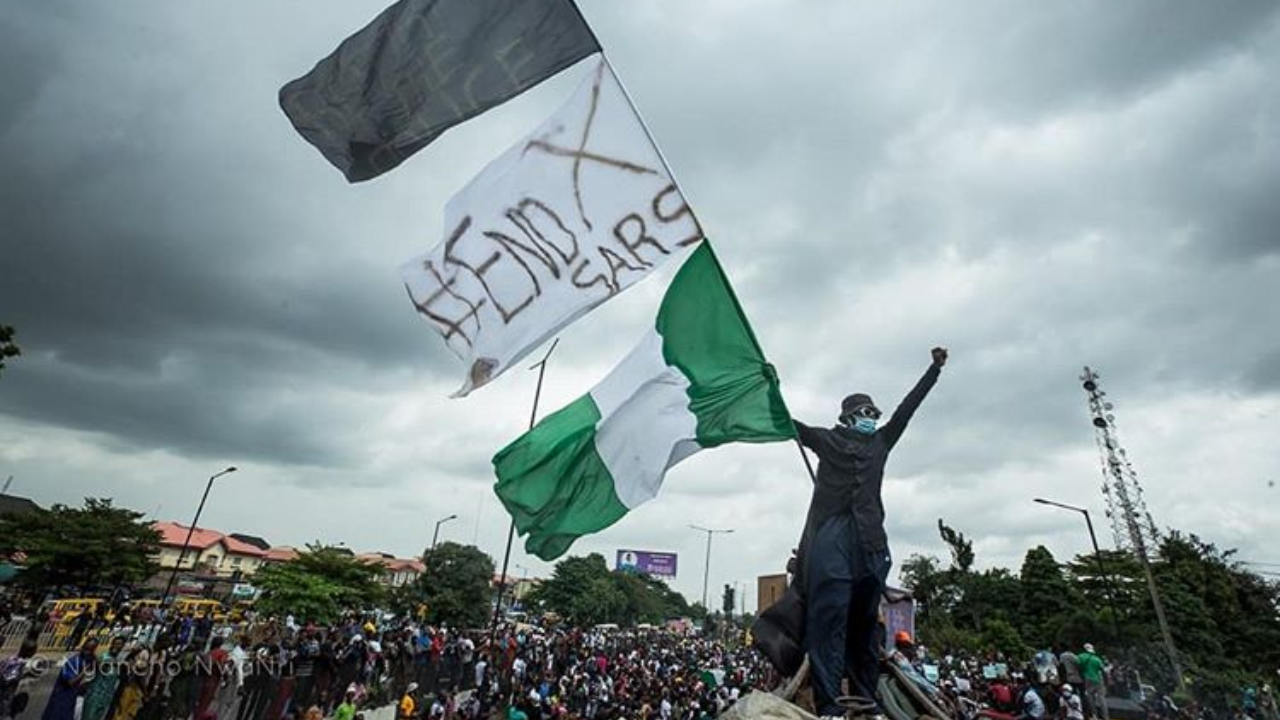
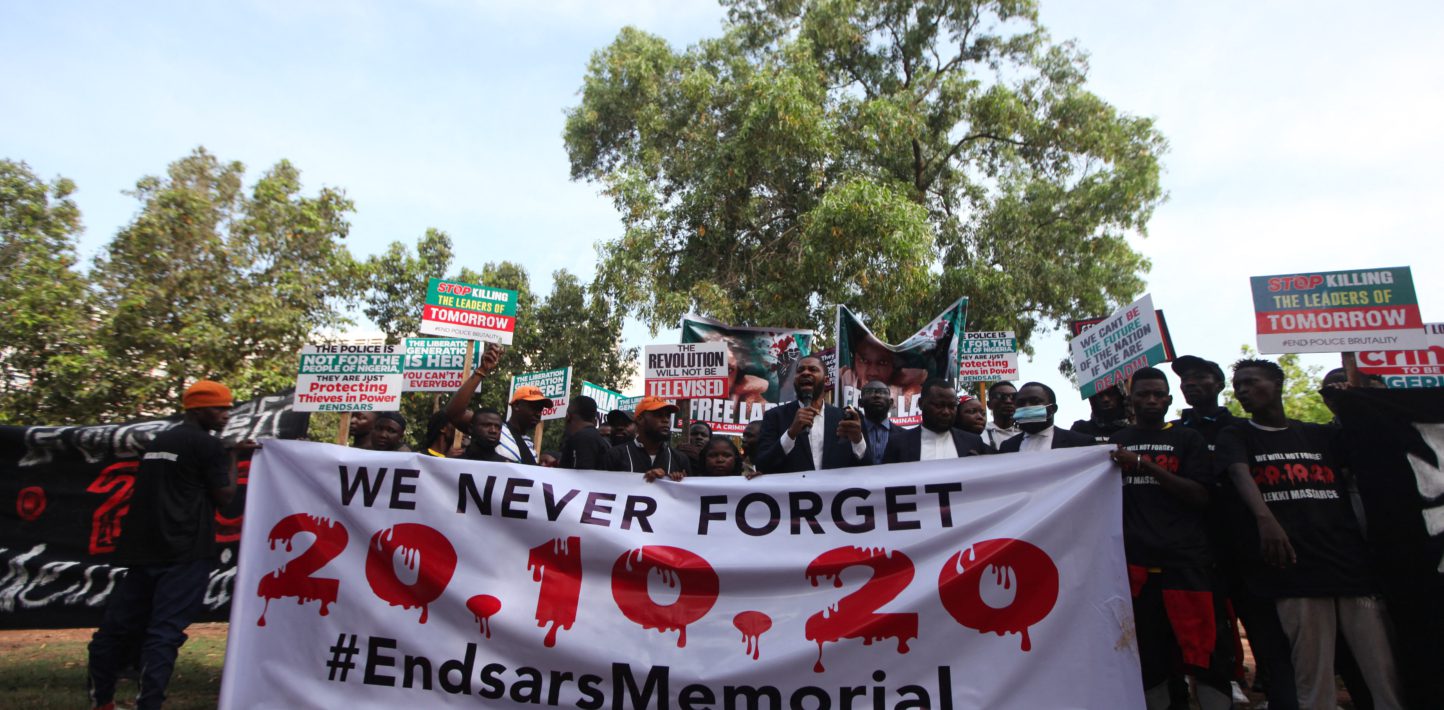
The EndSARS protests of October 2020 produced, across Nigeria, a documented record of security force violence against unarmed civilians that has still not resulted in a single successful criminal prosecution of any officer. Amnesty International documented, as of October 2023, that at least 15 EndSARS protesters still languished in a Lagos jail, three years after the protests ended. They were the people protesting police brutality. They are still in prison. The officers who were the subject of the protest remain, as far as public record establishes, unimprisoned. The ECOWAS Court of Justice issued a ruling in June 2024 finding the Nigerian government guilty of human rights abuses. The Lagos judicial panel described the Lekki Toll Gate shooting as a massacre. Multiple committees were convened. Multiple reports were written. And the defining measure of accountability in Nigeria’s justice system, a prosecution, a conviction, a sentence, has not followed.
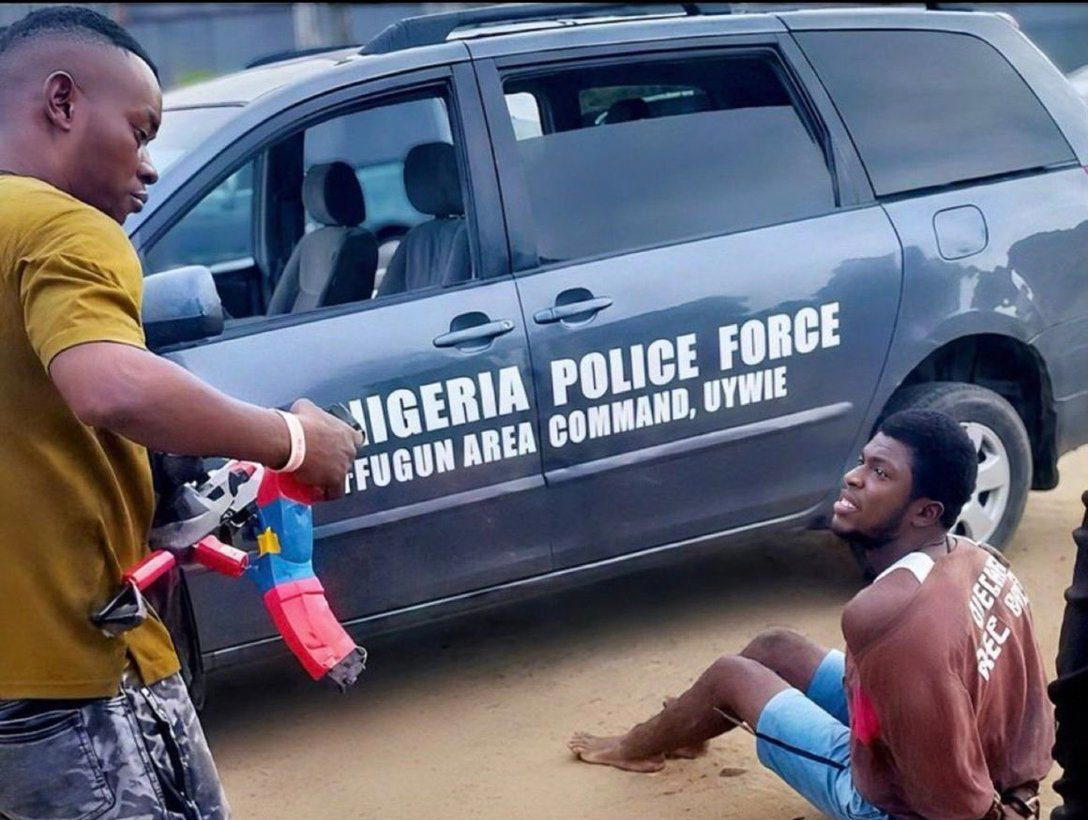
This is not unique to EndSARS. It is the operating system of impunity in Nigeria. ASP Nuhu Usman shot Oghenemine Ogidi (Mene Ogidi) dead in broad daylight in Effurun, Delta State, in April 2026. Ogidi had his hands tied behind his back. He was begging for his life. The Delta State Police spokesperson described the potential explanation as “spiritual.” The case, which generated national outrage in April and May 2026, has already begun its journey into the silence that Nigerian institutional processes are so good at producing. A new story comes. A new outrage follows. The old case drifts. The family waits. And the officer continues to exist inside an institutional framework that has historically produced very few examples of consequences for the people it employs.
The Compromised Judiciary and the Injustice That Reaches the Bench
Nigeria’s justice system has not failed by accident. It has been systematically weakened by the same impunity it is supposed to address. In 2016, the DSS raided the homes of multiple senior judges across Nigeria, finding large sums of foreign and local currency and other assets whose explanations the judges were required to provide. The National Judicial Council sanctioned some of those judges. A few were removed. But the broader culture of judicial compromise, of verdicts influenced by relationships, resources, and political considerations, has not been resolved by those events. It has been documented in the election petition courts, where rulings on consequential political cases have attracted legal controversy and public scepticism. It surfaces in land cases, in criminal cases involving powerful defendants, and in the institutional slowness that produces a situation where a coroner’s inquest into a journalist’s death in 2020 arrives at DNA confirmation in 2026, with the autopsy report still outstanding, and the next court date set for July 7, 2026.
LASUTH told the court in April 2026 that the reason the body could not be identified earlier was that the DNA samples had been destroyed when the Lagos State DNA and Forensic Centre was set ablaze during the EndSARS protests themselves. The very act of protest against police brutality, met with the violence that killed Pelumi, apparently also destroyed the forensic evidence that would have identified his body sooner. The system’s self-protective capacity is, in this regard, comprehensive. The impunity in Nigeria that allows those who act wrongly to flourish while those who speak truth are punished is not an isolated quirk. It is what happens when the institutions designed to produce consequences stop believing they are required to.
“Injustice anywhere is a threat to justice everywhere. We are caught in an inescapable network of mutuality, tied in a single garment of destiny.”
Dr Martin Luther King Jr., Letter from Birmingham Jail, April 16, 1963
Pelumi Onifade Deserved Justice. So Does Every Nigerian Who Comes After Him.
What does it cost a country when its citizens learn that there is no price to be paid for killing them? Not metaphorically. Practically. The 20-year-old who watches Pelumi Onifade’s case resolve into a six-year DNA confirmation with the autopsy still pending and no prosecution imminent learns something specific about the value the Nigerian state places on his life. He learns that the camera that documents injustice is more dangerous than the gun that commits it. He learns that the institutions designed to produce accountability will delay, obstruct, and exhaust his family until the public attention moves on. And he learns, above all, that survival in Nigeria requires that he not make the kind of trouble that Pelumi Onifade made simply by going to work with a camera.
The docility that allows this to continue is itself a product of this lesson. People are not silent about injustice because they do not care. They are silent because they have been educated by a long series of cases exactly like Pelumi Onifade’s that speaking costs more than staying quiet. Justice Crack was allegedly chained to a tree for asking about soldiers’ food. Pelumi Onifade was allegedly shot for filming what a civilian did with a gun at a protest. The message is consistent and it is received.
At Narrivon, we write the names because the names are what the system is working to erase. Pelumi Emmanuel Onifade. History student. 200-level, TASUED. Gboah TV intern journalist. 20 years old. Allegedly shot by police. Body tagged No. 1385. DNA confirmed June 23, 2026. Autopsy outstanding. No prosecution announced. Next court date July 7, 2026. This is not a statistic. It is a biography of a young Nigerian whose future was ended by the system that was supposed to protect him, and whose posthumous justice is still being extracted slowly from institutions that have every incentive to keep it slow. The citizens who demand that this stops, who show up to courts, who amplify the names, who refuse to let the next news cycle serve as a burial for this story, are doing the most important civic work available in Nigeria today. Not because it guarantees justice. But because the alternative, silence, is exactly what the system is counting on.
Pelumi Onifade went to a protest with a camera. He was 20 years old. Six years later, his mother wept in a courtroom while a DNA report confirmed what she already knew. Nobody has been charged. The man with the gun gave an interview. The boy with the camera got a tag number. This is injustice in Nigeria. Say his name.
Anuoluwa Soneye, NarrivonFrequently Asked Questions About Pelumi Onifade and EndSARS Justice
What happened to Pelumi Emmanuel Onifade?
Pelumi Emmanuel Onifade was a 20-year-old History student at Tai Solarin University of Education and an intern journalist with Gboah TV. On October 24, 2020, he was assigned to cover the EndSARS protests in Lagos. According to Amnesty International and multiple confirmed reports, he was allegedly shot and killed by police officers attached to the Lagos State Task Force. His body was allegedly deposited at Ikorodu General Hospital mortuary as unidentified body No. 1385. On June 23, 2026, a DNA test confirmed by the Lagos State DNA and Forensic Centre established that the body was Pelumi Onifade. The autopsy report from LASUTH remains outstanding as of the article’s publication. The case is adjourned to July 7, 2026. No criminal prosecution has been publicly announced.
Who is Abiodun Bolarinwa and why is he relevant to the Pelumi Onifade case?
Abiodun Bolarinwa is the President of the Yoruba Youth Forum (YYF). According to Wikipedia’s documented account of Pelumi Onifade’s killing, Pelumi was reportedly filming at a protest scene when he captured footage of Bolarinwa discharging a firearm. Bolarinwa subsequently gave an interview to The Nation newspaper in which he explained that he fired into the air rather than into the crowd. The confirmed public record does not establish a formal legal conclusion of criminal accountability arising from his presence or conduct at the protest scene. The contrast between the treatment of the armed civilian and the fate of the journalist who filmed him is central to any honest examination of injustice in Nigeria.
Has anyone been prosecuted for the EndSARS protests violence?
As of this writing, no security officer has been successfully prosecuted for violence committed against EndSARS protesters in 2020. The ECOWAS Court of Justice issued a ruling in June 2024 finding Nigeria guilty of human rights abuses during the protests. The Lagos judicial panel described the Lekki Toll Gate shooting as a massacre. At least 15 EndSARS protesters remained in Lagos prison as of October 2023, according to Amnesty International. The Pelumi Onifade coroner’s inquest, ordered by a Federal High Court in July 2024, is still ongoing.
Sources and Further Reading:
DNA test confirms body as late journalist Pelumi Onifade (Media Rights Agenda, June 2026) •
DNA confirms unidentified body as journalist Pelumi Onifade (This Day, June 26, 2026) •
After 6 years, DNA confirms what happened to Pelumi Onifade (Pulse Nigeria, June 28, 2026) •
DNA confirms Pelumi Onifade’s identity, Amnesty International condemns (SaharaReporters, June 25, 2026) •
Coroner confirms Pelumi Onifade identity after 6 years (Legit.ng, June 2026) •
Killing of Pelumi Onifade (Wikipedia) •
Youth leader explains why he shot into air during EndSARS protest (The Nation Nigeria, November 2020) •
Three years after EndSARS: at least 15 protesters still in Lagos jail (Amnesty International, October 2023)