The Docility of Nigerians: How We Learned to Sit Still While the Country Burns Around Us
A mathematics teacher named Michael Oyedokun was beheaded in Oyo State on May 17, 2026. Two other kidnapped victims appeared on video begging for their lives. Nigerians expressed outrage for about 48 hours. Then they went back to arguing about a celebrity’s personal life. This is political apathy in Nigeria, and it is not a coincidence. It is a trained response.
Let us start with something simple. A man named Michael Oyedokun went to work as a mathematics teacher in Oriire Local Government Area of Oyo State on May 16, 2026. Armed bandits raided three schools in the Ahoro-Esinele and Yawota communities that morning. They took him and 32 others, including 18 primary school pupils and 7 secondary school students. The next day, a video appeared on social media. In the video, Mr Michael Oyedokun was beheaded. In another video, the school principal, Mrs Alamu, appeared on camera begging Nigerians, the government, CAN, and anyone listening, to please help get them out. “We are all here. We need help,” she pleaded. And another teacher, Dahunsi Temitope Mary, added her voice to the same desperate appeal. The Punch confirmed the killing. Governor Seyi Makinde confirmed the killing. The government expressed condolences. And then the country moved on. Not because the others had been rescued. But because there was other content to consume.
Why Nigerians Remain Docile While Everything Around Them Collapses
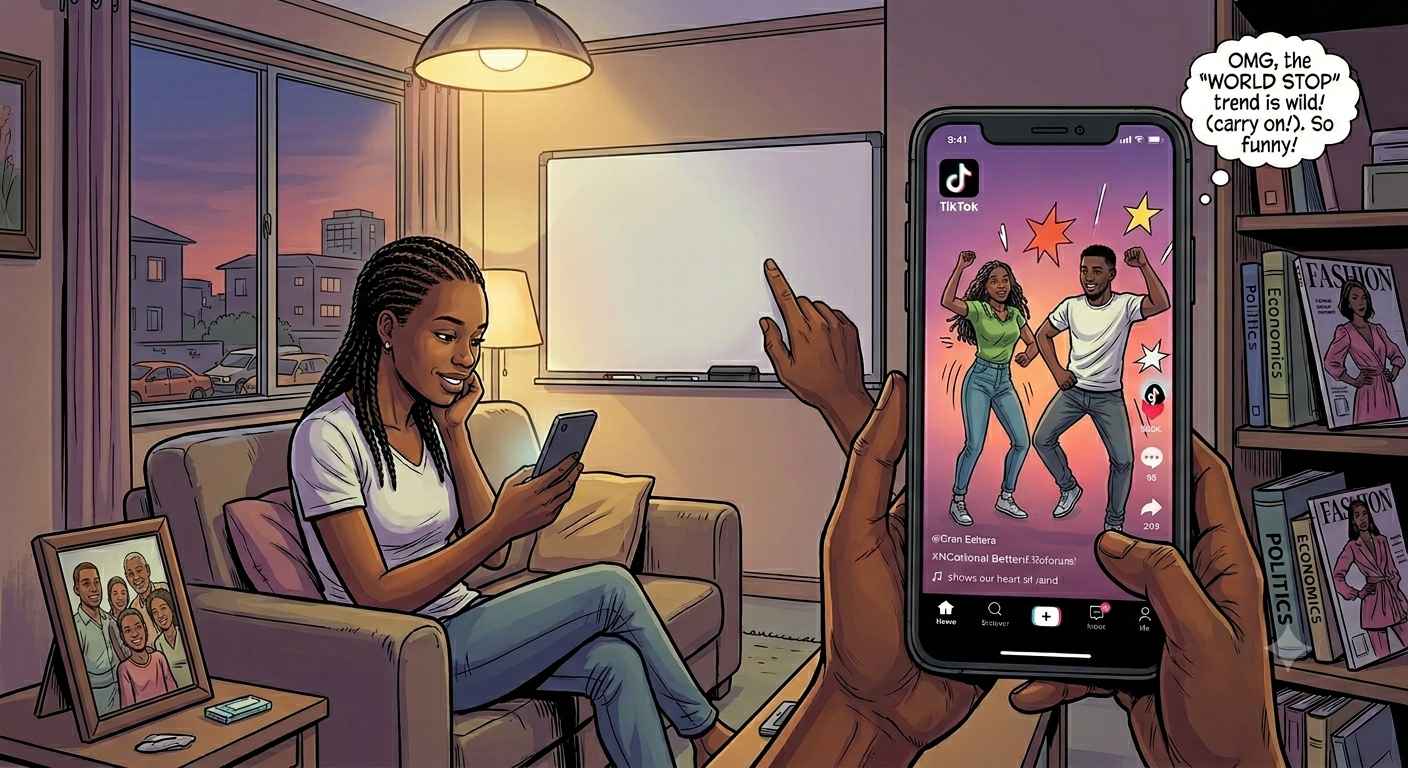
The docility of Nigerians is not a new phenomenon. It has simply been updated for the digital age. Where previous generations absorbed their suffering through religious sedation and cultural deference, as we explored in our piece on how religion and culture influence Nigerian society, the current generation has added a third sedative: social media entertainment. The combination is extraordinarily effective. You can be desperately poor, thoroughly ungoverned, and completely outraged, as long as you have something to argue about online that feels important without being politically dangerous. Nigerian social media has perfected this formula. When kidnappings in Zamfara become too heavy, there is always a skit maker’s controversy ready to trend. When the fuel price breaks another record, there is always a celebrity breakup to dissect. When a teacher is beheaded on camera, there are always hot takes about interpersonal disputes to dive into.
This is political apathy in Nigeria with a TikTok filter. And it is lethal.
The pattern of Nigeria’s national spirit of docility has a consistent logic: Nigerians are fine with things until they are personally affected. The kidnappings in Zamfara were a northern problem until bandits showed up in Oyo. The ASUU strikes were a student problem until employers started rejecting certificates from year-long academic gaps. The fuel subsidy removal was a necessary reform until the same N50,000 salary that once bought petrol for a month could now barely fill half a tank. Each crisis is someone else’s problem right up until the moment it arrives at your gate. And by then, the moment for organized collective action has usually already passed.
Insecurity in Nigeria, Strikes, Fuel, and the Slow Boil Nobody Noticed
Insecurity in Nigeria did not become a crisis overnight. It was a slow and very loud construction project that the country watched being built, brick by brick, for years. ASUU went on a strike in 2022 that lasted eight months. The longest in Nigerian academic history. For eight months, university students sat at home, their academic calendars suspended, their futures on hold, while the government negotiated and renegotiated an agreement it had already signed. The response from the majority of non-student Nigerians? Mild sympathy, brief outrage, and then scrolling past. It was a student problem.
Then came May 29, 2023. The day President Bola Tinubu was sworn in and, in his inauguration speech, announced the removal of fuel subsidy. Petrol, which had been selling at N184 per litre under the subsidy regime, shot past N500 in days and eventually crossed N1,000 per litre by 2024. The cost of transportation doubled. The cost of food doubled. The cost of everything dependent on fuel, which is everything in Nigeria, doubled. The response? Protests in a few cities. Some trending hashtags. Then acceptance. Because acceptance is what docility and the Nigerian citizen have built together across decades of practice.
Nigeria’s rising insecurity crisis has followed the same pattern. The NBS documented over 614,000 Nigerians killed in one single year between May 2023 and April 2024. This is not a typo. Over six hundred thousand people. In one year. Nigeria, an insecurity hotspot, is producing numbers that would constitute a humanitarian emergency in any other functioning democracy on earth. Instead, the government held graduation ceremonies for 744 ex-terrorists and the Chief of Defence Staff compared them to the biblical prodigal son. We covered this in detail. The country absorbed it. It trended for a day. Then it did not.
It got so extraordinary, so surreal, that Nigerians began publicly fundraising to pay ransoms for kidnapped victims. Not demanding that the government secure citizens. Not organizing for political change. Fundraising. On social media. To pay the people who kidnapped Nigerians. With money from other Nigerians. Because the state had effectively outsourced the ransom industry to civic crowdfunding and the people had quietly agreed this was now normal.
The Country Is on Fire. But Have You Heard About the Celebrity Situation?
Here is the uncomfortable truth about political apathy in Nigeria: it is not that Nigerians do not care about anything. It is that they have been taught to care intensely about the wrong things. Nigerian social media is one of the most energetic, creative, funny, and thoroughly engaged spaces in the world. Nigerians have opinions. They have strong opinions. They have aggressive, articulate, extensively researched opinions. About each other’s personal lives. About who said what about whose husband. About which content creator is problematic. About tribal and religious grievances that keep the population neatly divided into groups too busy fighting each other to look in the same direction.
When a well-known TV personality’s marriage hits a difficult period, Nigerians engage with the story for weeks. The takes multiply. The updates multiply. The analysis multiplies. When news breaks that a popular social media figure said something controversial about someone else’s relationship, the timeline erupts. Meanwhile, the Lagos-Calabar Coastal Highway, a project whose contract was awarded without competitive tendering and whose projected cost sits in the range of N15 trillion, receives a fraction of that attention. The corruption in Nigerian governance that makes such contracts possible goes largely undiscussed. Because budgets are boring. Marriage drama is not.
The government, which has studied this pattern long enough to exploit it, understands perfectly that a population arguing about who is sleeping with whom is a population not asking where the infrastructure budget went. It is a population not demanding accountability for Nigeria’s rising insecurity. It is a population that has been successfully divided by tribe, religion, entertainment loyalty, and social media personality conflicts, into a collection of factions that are each too invested in their own outrage to organize around the one thing they all share: the experience of being poorly governed.
Nigerians will spend six hours arguing about a skit maker’s personal life and six minutes on the news that 614,000 of their fellow citizens were killed in a single year. This is not entertainment. This is a governance strategy working exactly as intended.
Anuoluwa Soneye, NarrivonEvery Nigerian Who Dared to Say Something and Paid for It
One of the most extraordinary features of Nigeria and the national spirit of docility is what happens to Nigerians who break it. The country does not simply ignore people who raise their voices about institutional failure. It actively punishes them. And then, in the most revealing detail of all, a significant portion of other Nigerians join in the punishment.
Onyinyechi Nwachukwu, known as Darkskinned Ella
In March 2026, Darkskinned Ella posted videos showing the conditions at the Ikorodu BRT terminal in Lagos, where commuters waited over two hours to board buses. The videos went viral. Lagos State deployed more buses. The improvement lasted days. When she returned to document the continuing problem, a transport worker threatened to seize her phone on camera. The Nigeria Data Protection Commission then warned her for filming in public without consent. Not the transport system for failing. Not the government for its inadequate infrastructure. Her. For filming a bus queue. She later said: “If anything should happen to me, Nigerians, you know what to hold.” That a 24-year-old woman documenting a bus queue needed to issue that kind of public safety statement tells you everything about why Nigerians remain docile. The lesson the country teaches is very clear.
Ushie Rita Uguamaye, known as Raye
In March 2025, Ushie Rita Uguamaye (Raye) posted a TikTok video describing the economic agony of corps life. She said eggs that once cost N800 now cost N6,500. She said the corps allowance of N33,000 could not keep pace with Lagos prices. She called Tinubu a “terrible leader.” She was summoned immediately. Her Local Government Inspector attempted to pressure her to take down the video. Her NYSC certificate was later withheld, which the NYSC attributed to a missed biometric clearance. The timing was widely disputed. Amnesty International called on NYSC to “rescind its arbitrary and outrageous decision.” Her father, a Chief Inspector of Immigration, died in 2019 after protesting the demolition of his farm for the Obudu International Airport. Like daughter, like father. Nigeria does this to families that speak.
Justice Mark Chidiebere, known as Justice Crack
Justice Crack posted a video about soldiers eating poorly. The army allegedly chained him to a tree for 72 hours. He was then arraigned before a Federal High Court on three counts of distributing false information. The Foundation for Digital Justice, led by Senior Counsel Festus Ogun, demanded his release. The case goes to trial on May 25, 2026. His name is Justice. He was punished for seeking it. If Nigeria were a film, that detail would be cut for being too on the nose.
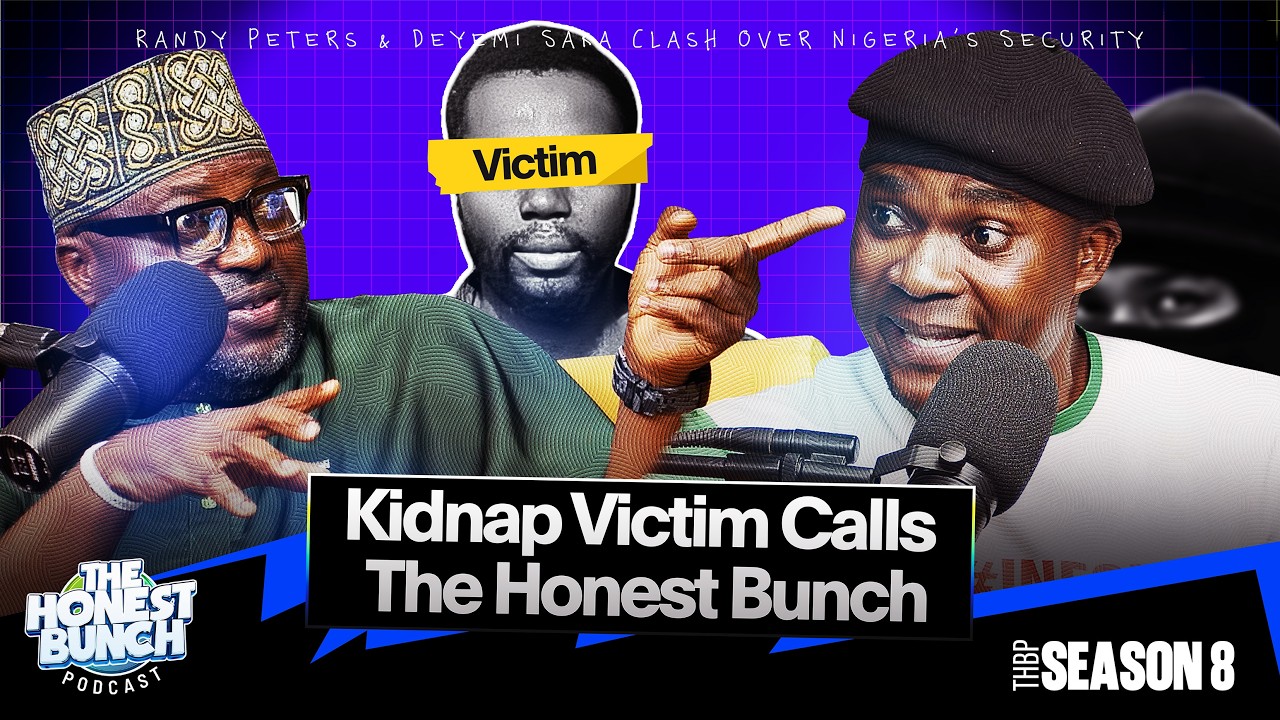
And then there is VeryDarkMan (Martins Vincent Otse), born April 8, 1994, a social media commentator who has been arrested, threatened, and publicly vilified multiple times for raising accountability questions. There is Mama Pee (Oruche Ogeamara Precious), a youth activist from Benin City who filmed an alleged attack on a political gathering in February 2026, who confronted a Labour Party official at an Abuja airport in September 2025, and who stood crying outside the courtroom where Justice Crack was arraigned. And there is Randy-Peter Akah (Randy Peters), a content creator with over 900,000 Facebook followers, who keeps showing up to these conversations when most people scroll past.
What all these people share is this: they speak. And what Nigeria consistently does to people who speak is use them as entertainment, tear them down when they become controversial, and then move on when they are imprisoned, threatened, or silenced. Nigerians do not protect the people who speak for them. That is a feature of docility and the Nigerian citizen that the state has relied upon for years.

The Nigerians Most Passionately Defending the Status Quo Are the Ones Least Affected By It
There is a particular kind of Nigerian political apathy that is dressed in the costume of political engagement. It is the apathy of the person who enthusiastically defends a system from outside its reach. Among the most vocal defenders of the current administration are figures who have built their platforms on passion and visibility but whose immediate families, by documented public record, do not live inside the Nigeria they are asking others to be patient about.
Reno Omokri, whose political evolution we have documented in detail, is Nigeria’s Ambassador-designate to Mexico. He is also a man who lived in the United States for years, whose family is based abroad, and who posts columns and tweets about Nigerian governance with the certainty of someone whose electricity does not come from a generator. The fuel price hike that made N33,000 corps allowances worthless has not landed in the same way on a man with an international posting. And yet the voice is loudest from that distance. This is a consistent pattern: the Nigerians most invested in defending the government’s pace and decisions are, more often than not, the Nigerians most insulated from the consequences of that pace.
Meanwhile, the same government whose supporters argue loudly online has produced a country where Nigeria’s maternal mortality rate sits at approximately 1,047 deaths per 100,000 live births, one of the highest in the world. Where over 95 million Nigerians live in extreme poverty. Where university students routinely lose years to academic strikes. Where rent hikes have made the idea of a self-contained apartment a luxury that requires fundraising from family and friends to achieve. Where children of political officeholders study in the UK and Canada while public schools in their parents’ constituencies collapse. The legislators who vote on your children’s education budget send their own children abroad to be educated. This is not an accusation. It is a documented national pattern.
“The most common way people give up their power is by thinking they don’t have any.”
Alice Walker, American novelist and activist
The Data Behind the Docility
Perhaps the most honest measure of why Nigerians remain docile is what happens when you put the numbers in front of them. Nigeria’s infant mortality rate sits at approximately 54 deaths per 1,000 live births. That means for every 1,000 babies born in Nigeria, 54 die before their first birthday. Nigeria is simultaneously an insecurity hotspot where security forces are underfunded, under-armed, and sometimes underfed, as Justice Mark Chidiebere documented at great personal cost. The government responded to documented insecurity not by tripling security budgets but by graduating 744 ex-terrorists in a ceremony and calling it policy.
The Lagos-Calabar Coastal Highway project, one of Nigeria’s single most expensive infrastructure initiatives, was awarded at a cost reported in the range of N15 trillion without a competitive public tender. Multiple civil society organizations raised transparency concerns. The contract details remain opaque. Diaspora investor Stella Okengwu alleged her N375 billion property was demolished for the route with soldiers as enforcers, and that ministry officials demanded a $150,000 bribe to redirect the road. The Minister of Works and the presidency have not offered a public account that satisfies the concerns raised. Most Nigerians did not follow any of this. Most Nigerians could not name the minister responsible for roads if you asked them at a party. But they could name the cast of the latest reality TV show.
Nigerians do not ask questions. Not because they are unintelligent. But because they have been systematically discouraged from asking them. They have watched what happens to the people who do. Justice Crack asked about soldiers’ food. He was allegedly chained to a tree. Ella asked about BRT buses. She received threats and a letter from the Data Protection Commission. Raye said the corps allowance was inadequate. Her certificate was withheld. The message is consistent. It lands. And the majority of Nigerians absorb it and quietly decide that silence is safer.

The Nigeria of Our Dreams Requires Nigerians Who Are Awake
Mrs Alamu is still in captivity as this article is written. Dahunsi Temitope Mary is still begging on video. The community of Ahoro-Esinele is still in mourning. Mr Michael Oyedokun’s children are writing their exams while trying not to see the video of what was done to their father. And Nigeria is having another conversation about something else entirely.
This is political apathy in Nigeria in its most brutal form. Not the quiet kind. The kind that has faces. The kind that has names of teachers who should be alive. The kind that is measured in months of ASUU strikes, in litres of fuel that cost what a family once spent on rent, in ransom funds crowdsourced on Twitter because the state abdicated the responsibility of safety. Nigeria’s rising insecurity is not a force of nature. It is the predictable result of a population that has been trained to look away at the precise moment when looking directly would produce change.
The government is bad. That is documented. The government is corrupt. That is documented. The government is often more interested in its own continuation than in the welfare of the people it governs. That is documented too. But the government is not the deepest problem. The deepest problem is a culture that has decided that speaking up is someone else’s job, that accountability is for the bold few, and that the rest of us are just here to react, trend, and move on. That culture is what allows bad governments to breathe. And that culture is the one thing that no election, no policy change, and no new administration can fix without your direct participation.
The revolution Nigeria needs is not violent. It is attentional. It is the revolution of deciding that a teacher beheaded in Oyo deserves more than 48 hours of your engagement. That a soldier’s welfare video deserves more than a retweet before you switch to entertainment content. That the budget line for road construction deserves the same forensic scrutiny you bring to a celebrity’s personal life. That the people who speak on your behalf deserve to be protected, not abandoned the moment they become inconvenient or controversial.
At Narrivon, we document this because documentation is the first act of resistance. We name the things designed to be forgotten. We build the record that makes looking away harder. But the record only matters if you decide to use it. Read it. Share it. Talk about it in places where it is uncomfortable to talk about it. Bring it to the party, to the church, to the office, to the family group chat. Ask the questions Nigeria is trained not to ask. And when someone punishes you for asking, as they very likely will, understand that the punishment is the proof that the question was worth asking.
“If you are neutral in situations of injustice, you have chosen the side of the oppressor.”
Desmond Tutu, Archbishop and South African anti-apartheid activist
Why Nigerians remain docile is a question that has a long and complicated answer. But the short answer is this: because it has been made easier to be silent than to speak, cheaper to scroll past than to show up, and safer to care about everything except the things that actually govern your life. That calculation can change. It changes the moment enough people decide that the cost of silence is higher than the cost of speaking. Nigeria has produced those people. They are being arrested, harassed, and threatened every week. The question is whether enough of the rest of us will decide that their cause is also ours, before it becomes our turn to appear on video, begging for help that is already moving on to the next trend.
Sources and Further Reading:
Bandits behead abducted Oyo teacher Michael Oyedokun (The Punch, May 2026) •
Oyo teacher Michael Oyedokun beheaded by terrorists (PM News, May 2026) •
Oyo school kidnap horror sparks outrage (The Guardian Nigeria, May 2026) •
Family of killed Oyo teacher appeals against sharing videos (QED.NG, May 2026) •
TikToker Darkskinned Ella fears for safety after exposing BRT crisis (The Punch, March 2026) •
Nigerians harass content creator who exposes BRT insufficiency (YNaija, March 2026) •
NDPC warns content creators after Ella’s BRT video (QED.NG, March 2026) •
Biometrics or backlash? NYSC’s quiet retaliation against Raye (Leadership Newspaper, August 2025) •
Amnesty International demands NYSC rescind Raye’s certificate denial (X / Amnesty International Nigeria, August 2025) •
Security crisis in Nigeria: Randy Peters and Deyemi Saka debate after kidnap survivor’s call (YouTube, The Honest Bunch Podcast, March 2026) •
VeryDarkMan (Martins Vincent Otse) (Wikipedia)
Leave a Reply