
The Checkpoint That Stole From a Ransom: What Charles Omole Says the Kidnapping Industry Actually Looks Like
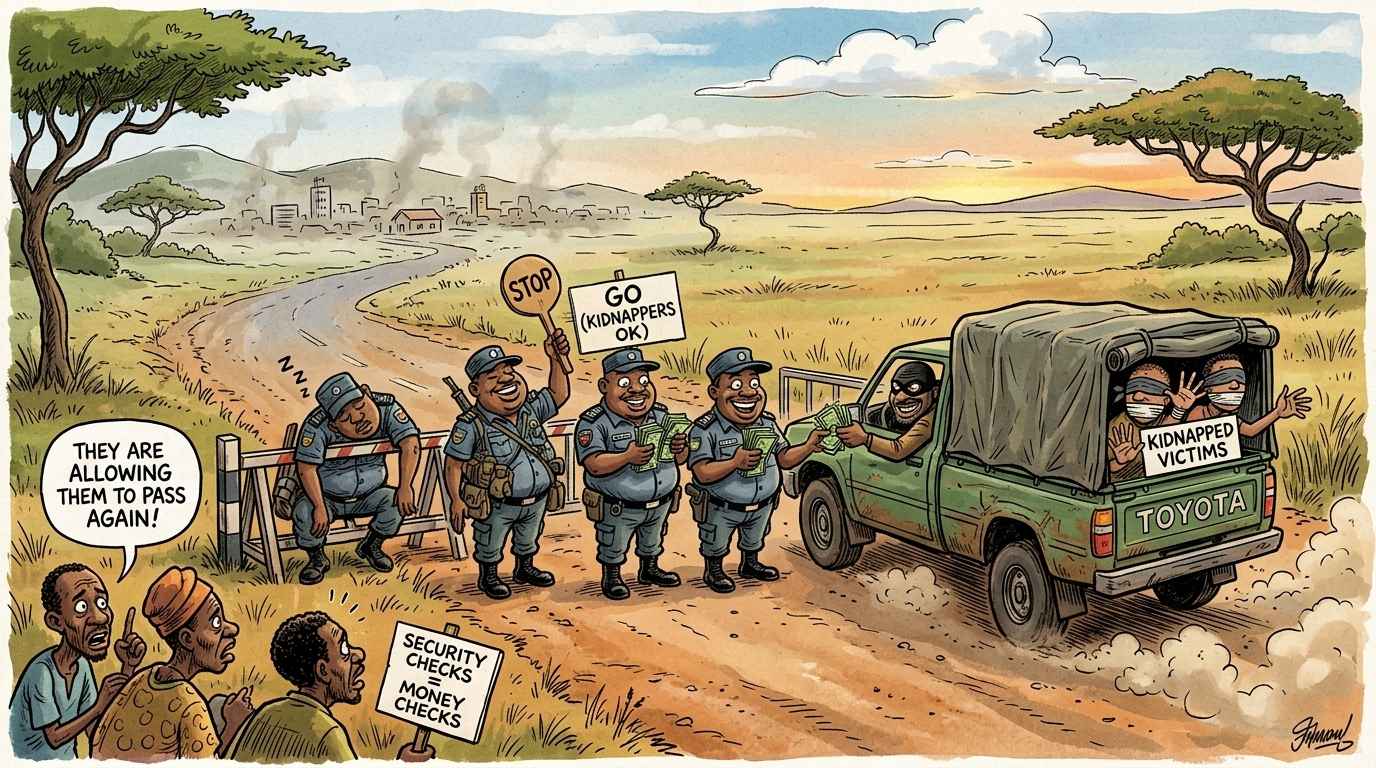
A man went to deliver a ransom for a kidnapped relative of a friend of Dr Charles Omole. He had to pass three military checkpoints on the way to the rendezvous point. By the time he reached the third one, soldiers had taken a cut so significant that when the kidnappers counted the money, millions were missing. The courier explained what happened. The kidnappers, according to Omole, were not even surprised. They said there was no problem. This article is about what that lack of surprise actually reveals.
There is a specific kind of story that circulates in Nigeria in whispers rather than headlines, not because it is rare, but because it is common enough that people have stopped treating it as news. Author, lawyer, and political commentator Dr Charles Omole told one such story publicly, and it deserves to be pulled out of the whisper network and examined in daylight. It concerns the Abuja-Kaduna railway kidnapping corridor, one of the most notorious kidnapping zones in the country, and it is not simply a story about criminals. It is a story about what happens to a ransom on its way from a grieving family to the people holding their relative, and who takes a cut before it ever arrives.
Charles Omole’s Account of a Kidnapping in Nigeria on the Abuja-Kaduna Corridor
Dr Charles Omole
Speaking during an interview, Dr Charles Omole recounted a personal story connected to one of Nigeria’s most dangerous transit corridors, the railway line between Abuja and Kaduna, where several mass kidnapping incidents have occurred in recent years. He said the younger brother of a close friend was among those abducted, and that a ransom, which he recalled as somewhere in the region of N50 million to N100 million, had to be raised for his release. According to Omole, the person who travelled to deliver the ransom to the kidnappers’ designated rendezvous point had to pass through three separate military checkpoints along the way. At each checkpoint, he said, money was demanded from the courier. By the time the courier reached the third checkpoint, so much had already been taken that soldiers there, upon inspecting the remaining cash, reportedly told him plainly to tell the kidnappers that it was the checkpoints, not him, who had taken the difference.
When the courier finally reached the kidnappers and the money was counted, Omole said it was short by somewhere between N5 million and N7 million. The courier explained that the checkpoints along the way had taken the missing amount. According to Omole, the kidnappers’ response was simply that there was “no problem.” This detail, the casual, almost administrative acceptance of the shortfall, is the part of the story that deserves the most attention. It suggests a level of mutual, unspoken understanding between the parties supposedly on opposite sides of this transaction, an understanding so routine that a multi-million naira discrepancy required no further negotiation, no threat, no consequence.

Independent Evidence Confirms the Pattern Behind Kidnapping in Nigeria’s Ransom Corridors
Omole’s account, while a personal secondhand narrative that this article cannot independently verify in its specific figures, describes a mechanism that has been documented elsewhere with names, dates, and on-record sourcing. Peoples Gazette reported that Deji Oyewunmi, a passenger abducted in the March 2022 Abuja-Kaduna train attack, had a N100 million ransom raised for his release, and that those transporting the cash encountered Nigerian soldiers at several checkpoints leading toward the forests in Kajuru, Kaduna State. According to a source directly involved in the fund-raising, the soldiers “collected large amounts ranging from N100,000 to N220,000” at each stop, “boldly telling us that it was their share of the ransom and the bandits would understand.” By the time the money reached the kidnappers, it was short by approximately N700,000. The source added that the soldiers “had the audacity to openly collect their own share because they were laughing and mocking us at the checkpoints.” A separate source told the Gazette that some of the soldiers involved had themselves been deployed to guard bandit-affected forest areas for months without adequate food or supplies, adding that “the military generals abandoned them in the forests to the awareness of even the bandits,” a detail that complicates, without excusing, the picture.
Charles Omole’s account: a ransom of roughly N50 to N100 million for a kidnapped relative of a friend, with N5 to N7 million taken across three military checkpoints before reaching the kidnappers
Peoples Gazette’s independently sourced report on Deji Oyewunmi: a N100 million ransom for his release from the March 2022 Kaduna train kidnapping, with soldiers at checkpoints openly taking a cut, leaving the total roughly N700,000 short
In both accounts, the shortfall was accepted by the kidnappers with no apparent dispute or consequence
The kidnappers were told the checkpoints had taken millions of naira meant for them, and their response was that there was no problem. That is not the reaction of people being cheated. That is the reaction of people who already know exactly how this economy works.
Anuoluwa Soneye, NarrivonCharles Omole’s Blunt Answer on Security Force Knowledge of Kidnapper Locations
When the interviewer pressed Omole on whether Nigeria’s military and intelligence services know the locations of kidnapping camps, his answer left little room for ambiguity. Omole stated plainly that of course they know, and that every time a kidnapping happens in Nigeria, the military and intelligence apparatus are aware of where the perpetrators are operating. He said the standard official explanation is a desire to avoid “collateral damage,” the argument that a direct assault risks getting hostages killed in the crossfire. Omole characterised this as an excuse rather than a genuine operational constraint, arguing it is precisely this pattern of inaction that has allowed the kidnapping industry to keep growing.
This is Omole’s assertion and interpretation rather than a claim this article can independently verify with documentary proof of specific intelligence being deliberately withheld from action. What is independently documented is the broader pattern of security forces having verified locations and communication channels with kidnapper networks during negotiations, as seen in the case of Tukur Mamu, the Kaduna-based publisher who served as negotiator during the 2022 Kaduna train kidnapping. Mamu was later arrested in Cairo, Egypt, over allegations connected to his role in the ransom negotiations, with security sources alleging discrepancies between what was actually paid to secure hostages’ release and what victims’ families were told was required. The existence of a functioning, if informal, negotiation and communication channel between the state’s intelligence apparatus and kidnapper networks lends structural credibility to Omole’s broader argument, even where his specific claim about deliberate inaction cannot be independently confirmed.
Beyond Ethnicity: Omole’s Account of How Injustice Recruits for Terror Groups
Omole also used the interview to push back against the popular framing of Boko Haram and banditry as purely ethnic phenomena tied to a single group. He shared what he described as an account drawn from an intelligence report, involving a man who reported to the police that he had found another man in bed with his wife. According to Omole’s retelling, rather than the police acting against the man who had committed the offence, they detained the complainant himself for 30 days. Upon his release, embittered by the experience, the man was reportedly approachable and willing when terrorist recruiters came calling. His first assignment, according to this account, was a strike on a police station, in which he killed everyone present.
This is Omole’s account of a specific case he says comes from an intelligence report, and this article cannot independently verify the individual details of that particular story. What this narrative illustrates, regardless of its precise sourcing, is a documented and widely studied phenomenon in the academic and policy literature on violent extremism: that failures of the criminal justice system, humiliation, and perceived injustice at the hands of state institutions function as significant radicalisation drivers, distinct from and often more immediate than religious or ethnic ideology. As we have documented extensively in our coverage of impunity in Nigeria, a citizenry that experiences the criminal justice system as arbitrary, punitive toward victims, and protective of offenders is a citizenry with a documented vulnerability to exactly this kind of recruitment pitch.
“Every time people are kidnapped in Nigeria, the military and intelligence, they know. The excuse is always that they want to avoid collateral damage, that some of the hostages will be killed. But that is the excuse they are using, and that is why the industry is increasing.”
Dr Charles Omole, on the Nigerian kidnapping economy
86 Armed Non-State Groups: The Scale Behind Nigeria’s Insecurity Crisis
Omole also cited a figure attributed to the Inspector General of Police during the Buhari administration: that Nigeria was, at that time, home to 86 distinct armed non-state groups. This is a striking number, and one that reframes how Nigerians should think about the insecurity crisis. It is not one enemy. It is not even a small handful of organised, ideologically coherent movements. It is a fragmented ecosystem of dozens of armed actors, ranging from Boko Haram factions and ISWAP in the northeast, to the various Fulani-identified and Hausa-identified bandit gangs of the northwest, to Niger Delta militants, separatist groups in the southeast, and inter-communal militias in the Middle Belt. As we have documented in our broader coverage of insecurity in Nigeria, treating this landscape as a single, monolithic “Fulani terrorism” problem, as much popular discourse does, obscures the reality that these groups have wildly different origins, incentives, and relationships with the communities and, evidently, the security forces around them.
Eighty-six armed non-state groups is not a security crisis with one villain. It is an entire fragmented economy of violence, and economies do not grow this large without someone, somewhere along the supply chain, finding it profitable to let them keep growing.
Anuoluwa Soneye, NarrivonKidnapping in Nigeria Will Not End While the Checkpoints Get Their Cut
Charles Omole’s account, and the independently documented cases that echo it, point toward an uncomfortable structural truth that Nigeria has been slow to confront directly. A kidnapping industry cannot sustain itself at this scale, across this many years, involving this many actors, without some degree of institutional accommodation along its supply chain. When ransom couriers can predict, almost routinely, that checkpoints will take a cut, and when kidnappers can absorb that theft with a shrug rather than a threat, the transaction has stopped looking like crime meeting law enforcement. It has started looking like two parts of the same informal economy, operating with an unspoken shared understanding of the rules.
At Narrivon, we believe the Nigeria of our dreams requires citizens who do right, think right, act right, and refuse to let accounts like Omole’s be dismissed as the exaggeration of one storyteller. As we have asked before in examining whether government structures are part of Nigeria’s insecurity problem, the question deserves a real, independently audited answer rather than the comfort of assuming these are isolated incidents. Every ransom that passes through a checkpoint and arrives lighter than it left is evidence. Every kidnapper who accepts that shortfall without dispute is evidence. Eighty-six armed groups did not build themselves in isolation from the institutions meant to stop them. Until Nigeria treats that overlap as the central problem rather than an inconvenient footnote, the industry Omole describes will keep doing exactly what he says it has been doing: growing.
Frequently Asked Questions About Charles Omole’s Account of Kidnapping in Nigeria
What did Charles Omole say about a kidnapping ransom being reduced at military checkpoints?
Dr Charles Omole recounted a personal account of a kidnapping on the Abuja-Kaduna corridor involving the younger brother of a friend, where a ransom of roughly N50 to N100 million was raised. He said the courier delivering the money passed through three military checkpoints, at each of which money was demanded, and that by the time the money reached the kidnappers it was short by approximately N5 to N7 million. According to Omole, the kidnappers accepted this explanation without dispute.
Is there independent evidence of security forces taking cuts from kidnapping ransoms?
Yes. Peoples Gazette reported in 2022 that Nigerian soldiers took a cut from a N100 million ransom paid for the release of Deji Oyewunmi, a passenger abducted in the March 2022 Abuja-Kaduna train attack, with sources describing soldiers openly collecting money at checkpoints and mocking those transporting the funds. The shortfall in that case was reported as approximately N700,000.
Does the Nigerian military know the locations of kidnappers?
Charles Omole asserted in his interview that Nigerian military and intelligence agencies are generally aware of kidnapper locations during active abduction cases, and that the commonly cited justification for inaction, avoiding collateral damage to hostages, functions more as an excuse than an operational reality. This is Omole’s characterisation and has not been independently confirmed with documentary evidence in each specific case, though the existence of established negotiation channels with kidnapper networks during hostage crises, as seen in the 2022 Kaduna train kidnapping negotiations, supports the broader claim that security and intelligence services do maintain contact and knowledge during these incidents.
How many armed non-state groups exist in Nigeria?
Omole cited a figure attributed to the Inspector General of Police during the Buhari administration, stating that Nigeria was home to 86 distinct armed non-state groups at that time. This reflects the fragmented nature of Nigeria’s insecurity landscape, which includes Boko Haram and ISWAP factions in the northeast, various bandit gangs in the northwest, Niger Delta militant groups, separatist movements in the southeast, and inter-communal militias in the Middle Belt.
Sources and Further Reading:
Kidnapping: Govt, security officials made money under Buhari, Charles Omole alleges (The Interviews Nigeria, May 2026) •
Nigerian soldiers busted for sharing in N100 million ransom paid by Deji Oyewunmi (Peoples Gazette, July 2022) •
Kaduna-Abuja train attack: Bandits’ negotiator, Mamu, nabbed over N2bn ransom racketeering (Daily Trust) •
Nigeria arrests alleged mastermind of Abuja-Kaduna train attack (VOA News) •
Kaduna train: How ransom blockade triggered hostage beating video (Daily Trust, July 2022) •
Charles Omole: Buhari cabal planted stories in newspapers for him to read (TheCable)