
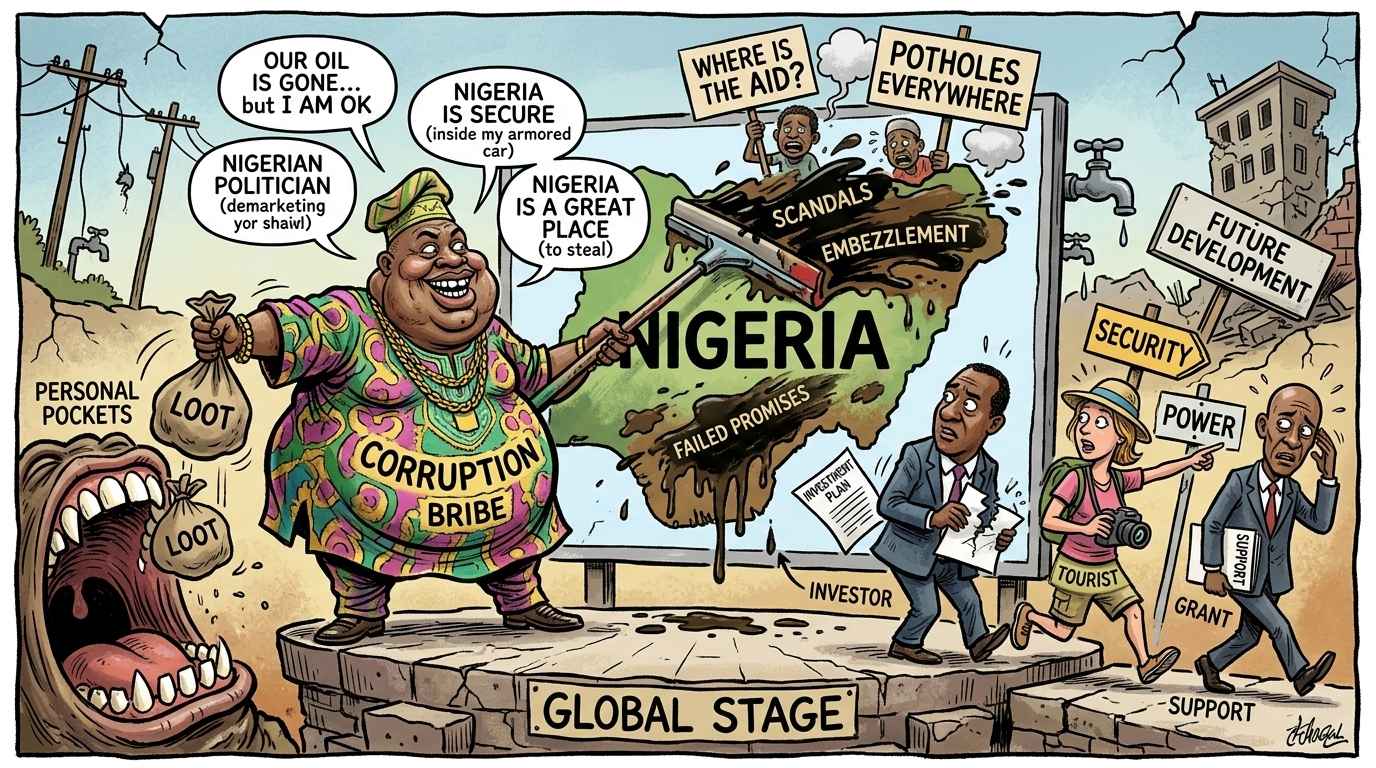
Absurdities in Nigeria: Who Is Really Demarketing Nigeria?
In one week, twenty corps members were “rescued” and then reportedly ransomed in dollars, a president danced while they were still captive, a military plane sat in a swamp for days, bailiffs and police met at a court order, and two rivals argued about homework. Nobody blinked. That is the real problem with absurdities in Nigeria.
Some stories arrive in Nigeria wearing a press release. Others arrive wearing dancing shoes. This week we got both, plus a plane, a court order and a school-day insult, and by Friday most of us had scrolled past all of it. That is how absurdities in Nigeria survive: they are so frequent that they glide over our heads without raising a single eyebrow. Content creator Osarogie Ogbonmwan (@osarogiee on Instagram) has made a name for himself by reading these events out in the straight-faced voice of a news anchor, which is the right format, because the events already sound like comedy sketches. And whenever such a clip travels abroad, we hear the familiar charge that Nigerians are demarketing Nigeria. So let us put that charge on the table and ask who is really demarketing Nigeria.
Absurdities in Nigeria, Part One: Twenty Corps Members “Rescued” and a Dollar Ransom
On October 1, 2026, twenty prospective NYSC members travelling from Ibadan in two 18-seater buses to orientation camps were abducted on the Owerri-Onitsha Expressway at Umunoha, Mbaitoli Local Government Area of Imo State. Their captors reportedly demanded N50 million per head, N1 billion in all, with a 24-hour ultimatum, according to Arise News. Imo Police Commissioner Audu Garba Bosso said drones had located the camp but that improvised explosive devices delayed entry.
On October 7, the Force Public Relations Officer, CSP Anietie Iniedu, announced the good news: “The Nigeria Police Force, in collaboration with sister security agencies, has rescued the 20 prospective NYSC corps members abducted in Imo State on 1st October 2026.” Applause, thanksgiving, a press release in perfect grammar.
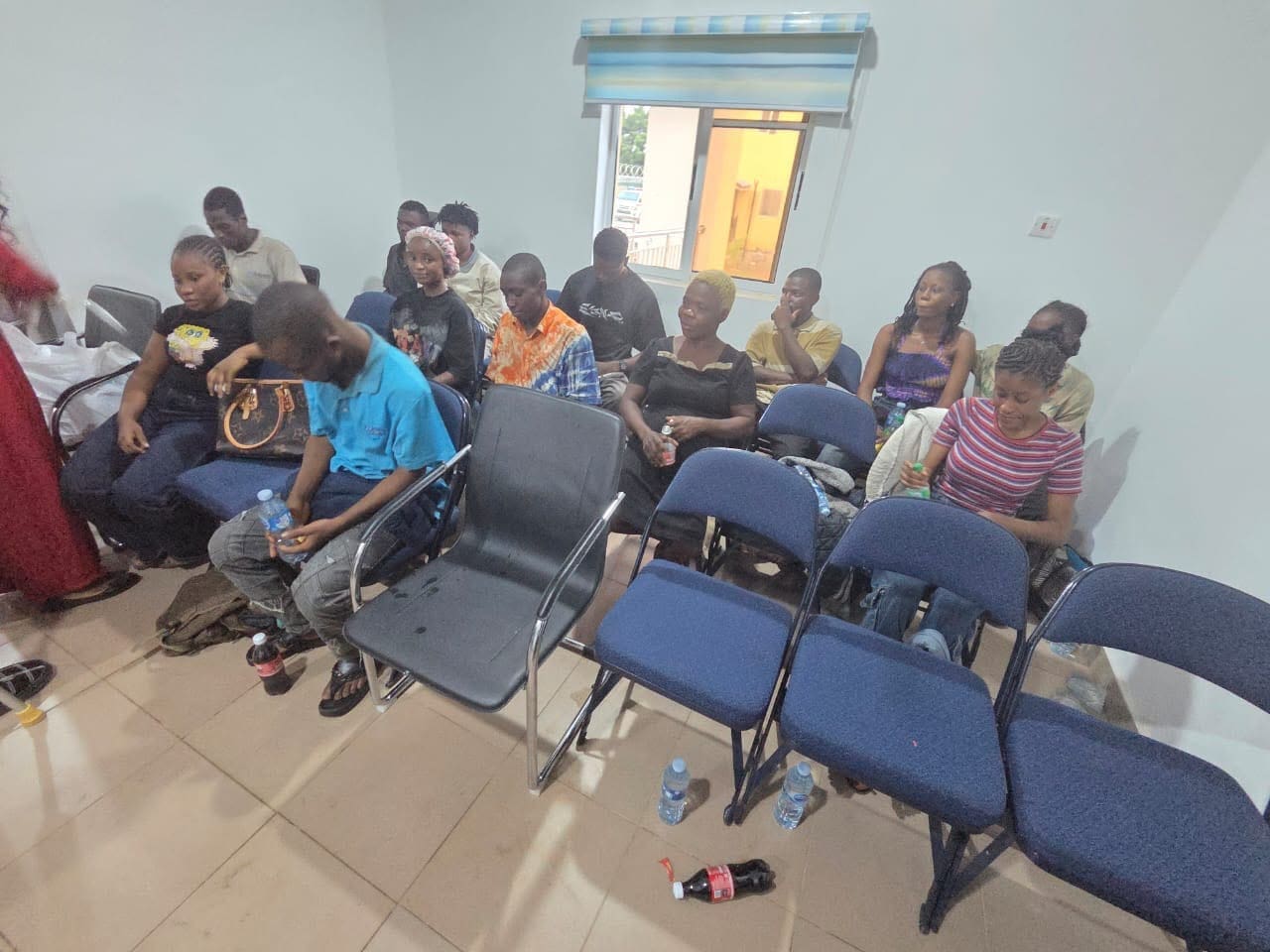
Then a parent spoke. A mother, Alirat Wahab, told News Central Television that the kidnappers first asked for N50 million per head, later dropped to N15 million, and finally settled on N6 million when the family said all it had was N5.5 million. “So, it’s that N6 million we paid,” she said, as Legit.ng reported. According to ICIR’s account of the family’s story, parents were asked to send representatives to a meeting point in Ibadan, the money was to be sent to an account, and on reaching Imo the representatives were to change it into dollars. Her elder son handed over the ransom and later called to say his brother was free.
In fairness, Commissioner Bosso told Channels Television he was not aware of any ransom being paid, and said the kidnappers yielded to pressure after operatives combed the forest. Both things can be true at once: security agencies can apply pressure while desperate parents quietly empty their savings. The absurdity is that only one half made it into the press release. A rescue that comes with a receipt is a rescue the public deserves to hear about.
Audu Garba Bosso: Commissioner of Police, Imo State Command
CSP Anietie Iniedu: Force Public Relations Officer, Nigeria Police Force
Lucky Aiyedatiwa: Governor of Ondo State
Tobechukwu Nweke: Attorney General and Commissioner for Justice, Anambra State
Insecurity in Nigeria and the Second Evil: A Security System You Cannot Trust
Here is what the Ibadan parents have really taught us. Nigerians now face two evils. The first is insecurity in Nigeria itself: kidnappers who negotiate in dollars. The second is a security system many citizens do not trust, because years of extortion at checkpoints, oppression and propaganda have taught them that official statements and lived experience rarely match. We have written before about the kidnapping economy, and NBS data reported by Anadolu Agency put ransom payments at N2.23 trillion in just one year. When families pay in private and the state celebrates in public, citizens learn to run their own security budget and their own fact-checking. That is a heavy tax on a people who already pay for light, water and roads themselves.
“The trouble with Nigeria is simply and squarely a failure of leadership.”
Chinua Achebe, The Trouble with Nigeria, 1983
Absurdities in Nigeria, Part Two: The Tinubu Dance While Parents Waited
Bola Ahmed Tinubu
Married to First Lady Oluremi Tinubu, and a former Lagos governor who once led the state whose Oba he was visiting. His portfolio spans every ministry, the armed forces and the Police Service, which makes any security failure a matter for his desk.
On Sunday, October 4, President Tinubu paid a courtesy visit to Oba Rilwan Akiolu at the Iga Idunganran Palace in Lagos, accompanied by Governor Babajide Sanwo-Olu and Chief of Staff Femi Gbajabiamila. As he arrived, cameras caught him making light dance steps. The clip exploded on X the next day, as Legit.ng documented. Many users were charmed. One wrote, “Politics aside, I’ll love to see pics or video clips of this man in his prime.”

Let us be fair. A president is allowed to smile at a palace, and greeting an Oba with energy is a Yoruba courtesy. Nobody is asking for a head of state in permanent mourning. The sting is in the calendar: on that Sunday, the twenty corps members were still in the hands of their captors, and their parents were still raising money. Empathy in leadership is a measure of priority. We made the same point after the Jos airport visit in our piece on how Nigerian leaders lack empathy, and we are not surprised to be making it again. Showing the same energy for citizens in captivity as for ceremonial arrivals would cost nothing and signal a great deal.
Joy is allowed. Timing sends a message. A leader who finds a rhythm for the palace but no urgency for the captives tells the country where the priorities sit.
Anuoluwa Soneye, NarrivonAbsurdities in Nigeria, Part Three: The NAF Plane Crash and the Search for a Plane
On Monday, October 5, a Nigerian Air Force ATR-42, NAF 931, flying from Benin to Lagos, went down in a swamp near Igbokoda in Ilaje Local Government Area of Ondo State. Early reports, including Al Jazeera’s, said 32 people were aboard. The Air Force later said 25 were aboard, five crew and twenty passengers, and attributed the higher figure to a misreading of the phrase “25 souls on board, inclusive of seven crew”, according to ICIR. Names of the dead were released on October 6. Whichever number you accept, a military crash in which the count itself shifts is already an absurdity.
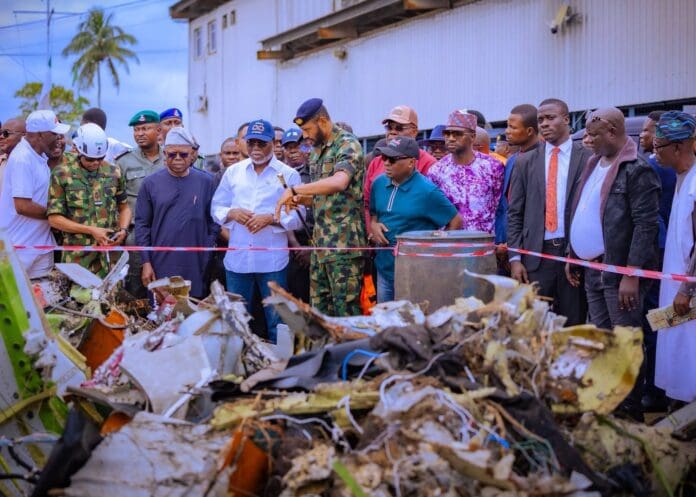
Then came the recovery. The footage that circulated showed local divers and fishermen hauling out fragments, and many Nigerians asked where the search-and-rescue machinery was. To be fair to the record, the Navy, the Air Force, the police, NEMA and the Ondo State Emergency Management Agency were all deployed, and the state sent swamp buggies. Yet by Thursday, roughly 72 hours after impact, ICIR reported that the main wreckage and the black box had still not been recovered. The investigation is ongoing and no cause has been determined, so we draw no conclusion about why the aircraft fell. What we can say is that a country of 220 million people looked at a submerged plane and relied heavily on the local divers who happened to be nearby. Governor Lucky Aiyedatiwa credited the pilot with steering away from the community, and the site was reportedly about 200 metres from homes.
Absurdities in Nigeria, Part Four: Awka Bailiffs, a DPO and a Court Order
On October 7, in Awka, Anambra State, bailiffs of the Chief Magistrates’ Court said they were executing a court warrant when a man identifying himself as the Divisional Police Officer of B Division told them to stop and follow him to the station. They said they were acting under a court order and asked to finish first. They alleged that more officers arrived and the encounter became confrontational, and a video of the scene went viral. The Nigeria Bar Association, Anaocha Branch, rejected parts of the police account and called for a transparent investigation. The Anambra Police Command has offered its own explanation, which, as described to us, says officers responded to a disturbance, learned the men were bailiffs, advised them on the proper procedure and withdrew. These accounts conflict, and the assault claims remain allegations.
What is not in conflict is the response from government: Attorney General Tobechukwu Nweke set up a fact-finding committee, with a statement urging parties to “be calm and exercise patience until the investigation is concluded”, as TheNigeriaLawyer reported. Whatever the committee finds, the picture is worth a pause: a court officer carrying a court order and an armed police division debating who has the final word. A country where the order of a court needs police permission to be enforced has a gap between its constitution and its sidewalks. We have discussed this gap in how corruption in Nigeria compromises Nigerians.
Absurdities in Nigeria, Part Five: Atiku’s “Dull Student” and the 30-Day Petrol Discount
Alhaji Atiku Abubakar
A former customs officer turned businessman and politician, Atiku has contested the presidency several times, including in 2019 and 2023 under the PDP. His signature economic idea this season is a production-based fuel subsidy, which is where our story picks up.
The Federal Government, through Finance Minister Taiwo Oyedele, announced a 30-day petrol discount through NNPC stations, describing it as selling petrol at cost rather than a subsidy, with a proposed N1,350 per litre ex-gantry ceiling reviewed monthly. Atiku’s camp responded with a statement from his spokesman, Phrank Shaibu, calling it a “calendar-scheduled, election-laced subsidy package” and asking, “What happens on Day 31?” Atiku himself went further, as GistReel reported on October 9: “You are like a dull student who copied his classmate’s answer.” He added, “You see why it is good to go to school?” The Presidency has earlier dismissed Atiku’s ideas as “serious ignorance on governance and economy.”
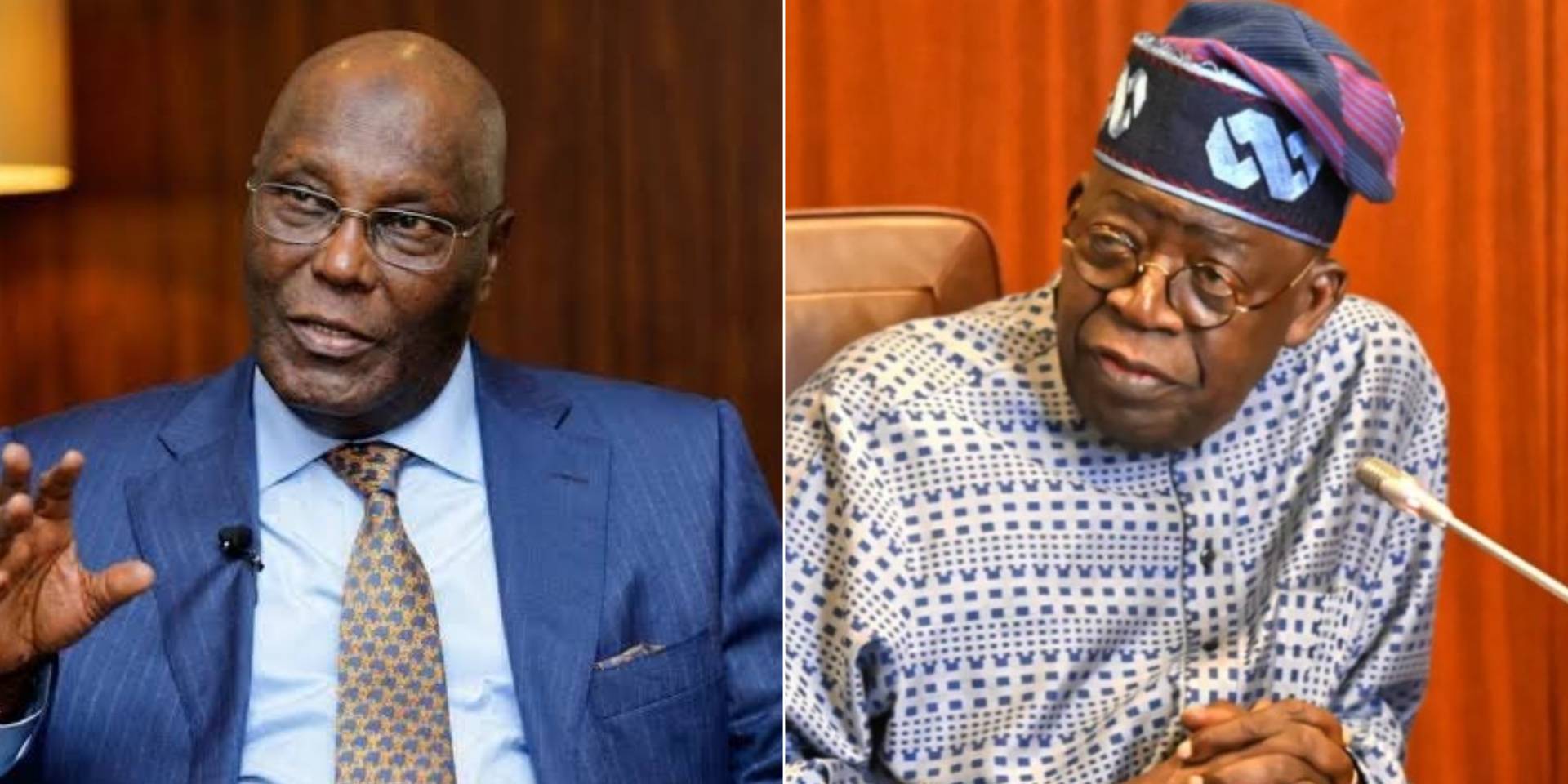
The school line lands on a long-running sore. The Presidency’s position is that Mr Tinubu graduated from Chicago State University in 1979, Nigerian courts have thrown out challenges to his certificate, and Atiku has pursued the records in a US court. We make no new claim here. We simply note the absurdity of a petrol price debate turning into a classroom insult while the pump price is what Nigerians feel. One side says copying is a compliment, the other says it is plagiarism, and the commuter at the bus stop is still doing the arithmetic. If the proposal works, who wrote it matters less than whether the discount survives Day 31.
Who Is Demarketing Nigeria? Nigeria’s Image Comes From What Happens, Not What Is Filmed
Now back to the charge. The next time a politician or a loyalist says Nigerians are demarketing Nigeria, apply a simple test. A phone can only film what already happened. The price of a corps member’s freedom, the timing of a presidential jig, the debris in a swamp, a bailiff arguing with a policeman: none of these were invented by a content creator. Osarogie Ogbonmwan and others who tell the story in a news style are doing what newsrooms once did, which is to say the quiet part out loud. Nigeria’s image is built by events, and the people most responsible for the events are not the ones holding phones.
Together, these six stories are the visible output of one larger system: a security architecture that cannot protect, a leadership culture that rarely feels what citizens feel, institutions that do not recover what they lose, and agencies that do not obey the courts they serve. So the work must go beyond laughing, and beyond outrage. We have written about the same pattern in whether Nigeria is a kakistocracy and in how public money is mismanaged.
“Our lives begin to end the day we become silent about things that matter.”
Martin Luther King Jr., widely attributed
Absurdities in Nigeria Are Exhausting, So Take a Breather
Reading about this many absurdities in Nigeria in one sitting is tiring. Many Nigerians are stressed, running on thin sleep and carrying more worry than any one head should hold. The news does not help, because it arrives at all hours and rarely arrives gently. So before we get to what we can do, here is a pause. Put on headphones, press play, close your eyes and let these calming sounds slow your breathing. Rest is not a luxury and it is not laziness. A tired citizen cannot speak up, and a rested one can. If your stress feels heavy or lasts for weeks, please speak with a doctor or a trusted person as well.
Absurdities in Nigeria End When Every Nigerian Commits Their Quota
Our aims here are simple. First, we want more Nigerians telling the realities and absurdities around them, in whatever style they can, whether that is a news-anchor parody, a thread or a blog. Second, we want everyone to see that these absurdities are unavoidable outputs of a larger systemic dysfunction, so that the fix is systemic too. Third, we want every Nigerian to commit their quota to making Nigeria work, whether that means asking the awkward question at the ward meeting, refusing to share an unverified story, or demanding that a press release come with the receipts.
Becoming better citizens, people who do right, think right, act right, speak up and actively participate, and who have the guts to demand for more, is a step toward the Nigeria of our dreams. The country will not be fixed by those who dance, those who deny or those who scroll past. It will be fixed by those who notice, those who say it out loud and those who show up. Be one of them, because the next absurdity is already being scheduled.
Frequently Asked Questions About Absurdities in Nigeria
What does demarketing Nigeria mean?
Demarketing Nigeria is a phrase used by some officials and supporters to accuse critics, journalists and social media users of damaging the country’s image by publicising its problems. Critics of the phrase argue that Nigeria’s image is shaped by the events themselves, not by those who report or satirise them.
Was a ransom paid for the 20 abducted corps members in Imo State?
A mother of one of the freed corps members said her family paid N6 million, and ICIR reported the family’s account that money was sent to an account and converted to dollars. Imo Police Commissioner Audu Garba Bosso told Channels Television he was not aware of any ransom, and the police statement credited a rescue by security agencies. The payment has not been independently confirmed.
How many people died in the Nigerian Air Force plane crash in Ondo?
Early reports said 32 people were aboard. The Nigerian Air Force later said 25 people were aboard, five crew and twenty passengers, and that no one survived. It attributed the higher figure to a misreading of a statement, and the cause of the crash remains under investigation.
What happened between the Awka bailiffs and the police?
Bailiffs of the Chief Magistrates’ Court in Awka said a man identifying himself as the B Division DPO stopped them from executing a court warrant on October 7 and that officers harassed them. The Anambra Police Command gave a different account, and the Anambra Attorney General set up a fact-finding committee. The assault claims remain allegations.
Sources and Further Reading:
Abductors of corps members in Imo collected ransom in dollars, family says (ICIR) •
Mother of freed NYSC member says family paid N6m (Legit.ng, October 2026) •
Kidnappers of 20 NYSC members give parents 24-hour ultimatum (Arise News) •
President Tinubu’s dance moves during visit to Oba of Lagos (Legit.ng, October 2026) •
Ondo air crash: civilians on board were families of officers (ICIR) •
NAF 931: Wreckage remains unrecovered after 72 hours (ICIR) •
Nigeria launches rescue after military plane crashes with 32 aboard (Al Jazeera) •
Viral video shows attempt to arrest bailiff executing court judgment (TheNigeriaLawyer, October 2026) •
Atiku accuses Tinubu of copying his fuel subsidy proposal (GistReel, October 2026) •
Atiku rejects Tinubu govt’s 30-day petrol discount (Legit.ng, October 2026) •
Data shows 614,937 victims killed in Nigeria from insecurity in one year (Anadolu Agency)