
Keji Giwa Is Banking on Nigeria Not Getting Better. His Own Story Explains Why That Bet Always Loses.
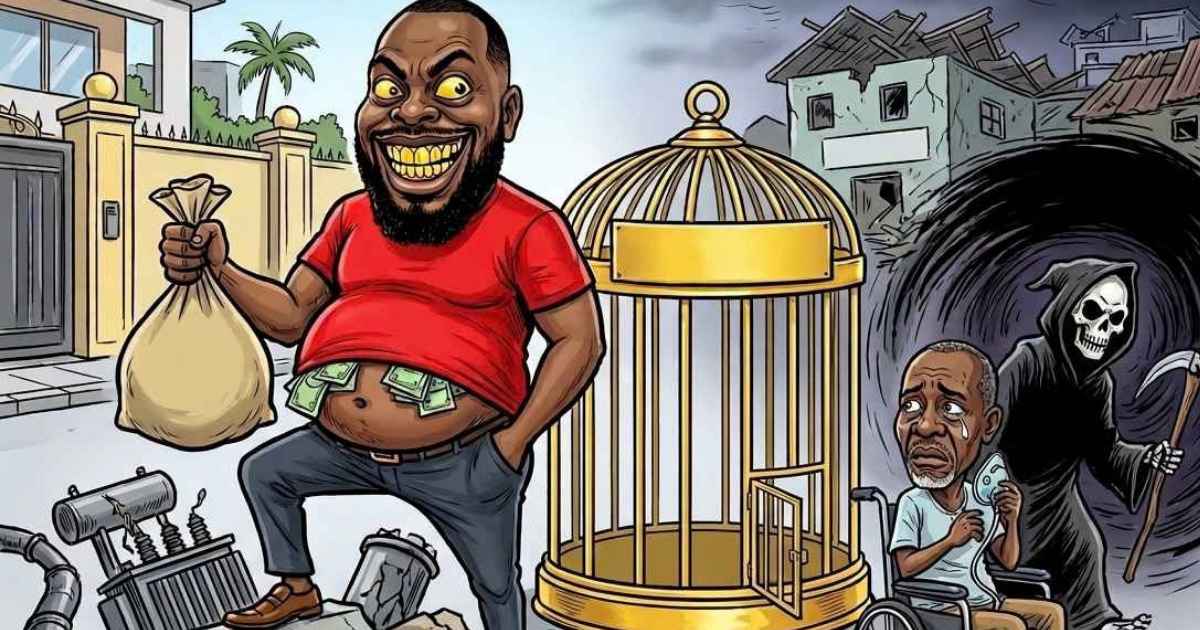
A Nigerian billionaire went on record defending his support for President Tinubu with a sentence that deserves to be studied rather than simply reposted for outrage: “Whether Nigeria gets better or doesn’t get better, I’m perfectly okay. In fact, I am banking on it not getting better.” In the same set of public interviews, the same man explained that his father died of ordinary food poisoning because every qualified doctor available that Sunday was in church. He never connected the two thoughts. This article does, because the connection is the entire story.
There is a specific kind of honesty that only wealth seems to permit in Nigeria, the honesty of a man who no longer needs to pretend he wants the system fixed, because the system, in its current broken form, is precisely what keeps his competitors out and his margins wide. Businessman Keji Giwa has been remarkably candid about this arrangement. What makes his candour worth examining closely is not simply that he said something unpopular. It is that in the very same run of public interviews, he told a second story, about his own father’s death, that quietly and completely demolishes the logic of the first one. This article is about both stories, why they cannot actually coexist the way he thinks they can, and what his contradiction reveals about a much larger Nigerian illusion: that enough money can buy a person out of a country’s collapse.
Keji Giwa’s Case for Banking on Dysfunction, in His Own Words
Morenikeji Abideen Tokunboh Giwa (Keji Giwa)
Keji Giwa, the British-Nigerian entrepreneur behind Digital Landlords, the Lekki-based Giwa Gardens water park, and a growing portfolio of short-let and hospitality ventures, addressed public criticism of his support for President Tinubu in blunt terms. Confirmed across multiple reports of the interview, Giwa said: “A lot of people are angry that I’m supporting Tinubu. What exactly do you want me to do? You want me to join you and point a finger at the very person that can snap a finger and everything that I have worked hard for is gone. Whether Nigeria gets better or doesn’t get better, I’m perfectly okay. In fact, I am banking on it not getting better.” He argued that business success in Nigeria is inseparable from political alignment, and that critics who fail to grasp this reality do not understand what it takes to sustain a large enterprise in the country.
There is a real, defensible argument buried inside this position, and this article is not interested in pretending it does not exist. Building anything of scale inside chaos requires identifying the gaps that dysfunction creates and filling them faster than anyone else. That is a legitimate entrepreneurial skill. But Keji Giwa did not stop at describing how he navigates chaos. He said he is actively rooting for the chaos to continue, because his own prosperity is structurally tied to Nigeria’s continued failure to fix itself. This is the difference between adapting to a flood and hoping it never stops raining. One is resilience. The other is a bet against the country he lives, builds, and, by his own account, was raised in.

Building a business in chaos and hoping the chaos never ends are two entirely different postures. One is resilience. The other is a bet against your own country, placed by someone who has convinced himself he is the one exception the country cannot touch.
Anuoluwa Soneye, NarrivonKeji Giwa’s Father and the Sunday That Contradicts the Whole Bet
In a separate, widely circulated appearance on the podcast Outside the Box, Keji Giwa shared the story of his father’s death in painful detail. He recounted that his father was preparing for his annual trip to the UK when he was taken ill. “What happened? Food poisoning. On that day he was taken to the hospital, it was a Sunday. He shouldn’t be dead. It’s ordinary food poisoning, but he died. He died because all the qualified doctors were in church on a Sunday.” Giwa said the loss shaped his views on religion so profoundly that, in his words, “you will never find me in a church in Nigeria.”
Here is the part of the story that Giwa did not appear to examine himself. His explanation for why his own father, a man whose family had clearly accumulated significant means, still died of an eminently treatable condition, is not primarily a story about religion. It is a story about staffing. A hospital with adequate emergency coverage does not become non-functional because it is a Sunday. In healthcare systems with genuine redundancy, built through consistent public investment, emergency and critical care physicians are scheduled in rotation precisely because illness does not observe the weekly calendar. The absence of a qualified doctor on a Sunday is not a religious failure. It is a staffing and systems failure, the exact category of dysfunction that Giwa has publicly said he is financially banking on continuing.
“My father died on a Sunday waiting for a qualified doctor. You know why? All the qualified doctors went to church. This is why you can’t find me in a church.”
Keji Giwa, Outside the Box podcast, May 2026
Why “Doctors in Church” Is Not the Actual Diagnosis Keji Giwa Needs
It is worth stating plainly, and with the seriousness this deserves, that not all doctors in Nigeria are Christians, and the framing of an entire staffing gap around a single religious practice obscures the structural problem underneath it. In countries with functioning health systems, emergency departments and critical care units maintain continuous physician coverage specifically because staff will always be unavailable at times, whether for worship, rest, illness, or family emergencies. The system is designed around the certainty of individual unavailability, not around the hope that everyone will always be present. Nigeria’s healthcare crisis is structural and well documented: the country allocates barely 5 percent of its national budget to health, far below the 15 percent target set by the 2001 Abuja Declaration that Nigeria itself co-authored, leaving primary healthcare centres understaffed, underequipped, or simply locked.
Nigeria’s health system operates at approximately 45 percent of capacity, below the WHO African Region average of 52.9 percent, according to a 2025 African Health Observatory Platform review
Over 4,000 doctors and dentists migrated out of Nigeria in 2024 alone, more than half to the United Kingdom, per the Nigeria Health Statistics Report 2024
Nigeria’s current doctor-to-patient ratio stands at approximately 1:9,083, far above the WHO-recommended ratio of 1:6,000
Nigerians spent over $1.6 billion on medical tourism in 2024 alone, money that never entered Nigeria’s own hospital system
This is why a doctor’s presence in church on a Sunday should never have been the deciding factor in whether a man survives food poisoning. The gap was not created by faith. It was created by decades of underinvestment that Giwa’s own preferred political outcome, continued dysfunction, has no incentive to close. As we documented in our analysis of Nigeria’s budget priorities, the same government structures that fail to adequately staff emergency medicine have, in the same fiscal year, found billions for palace renovations and religious construction projects entirely unrelated to the ministries funding them. The dysfunction Giwa says he is banking on is not an abstract, victimless business advantage. It is the specific category of failure that killed his own father.
Wealth and Nigeria’s System Failure: A Pattern That Keeps Repeating
Giwa’s family is not an isolated case. Nigeria has produced a growing, painful record of situations where financial success provided no meaningful protection against the country’s structural collapse. As we documented in our coverage of Adetunji “Teejay” Opayele, the 32-year-old co-founder and Chief Technology Officer of the successful Nigerian fintech startup Bumpa, a company that had processed over N160 billion in transactions for 60,000 small businesses, Opayele was killed on March 4, 2025, after a driver struck his motorcycle on Ozumba Mbadiwe Road in Victoria Island. Witnesses alleged the driver refused to assist him at the scene, reportedly to avoid staining her vehicle, and that bystanders struggled for over 30 minutes to find a hospital willing to help. Opayele’s professional success, his role at the frontier of Nigeria’s most celebrated tech sector, provided no protection against a system that failed him at the exact moment he needed it most.
In a separate and deeply painful instance that policy analysts have since examined for its systemic implications, acclaimed author Chimamanda Ngozi Adichie lost one of her infant twin sons in January 2026 at Euracare, widely regarded as one of Lagos’s most elite private hospitals. Health Policy Watch, in its subsequent analysis, used the case to illustrate a broader point about Nigeria’s healthcare architecture: that even access to the country’s very best private facilities does not fully insulate a family from the downstream effects of a national health system operating, by independent assessment, at less than half of its required capacity. This article makes no claim about the specific medical circumstances of that loss, which remain a private family matter deserving of continued respect. What the case illustrates, at the level of policy rather than personal detail, is the same lesson Opayele’s death and Giwa’s own father’s death illustrate: proximity to the best version of a broken system is still proximity to a broken system.
A tech founder building a billion-naira company. An author read across the world. A businessman’s own father. None of their success purchased immunity from a system that does not check anyone’s bank balance before it fails them.
Anuoluwa Soneye, NarrivonWhy Betting Against Nigeria’s Recovery Is a Bet Against Yourself
There are, undeniably, Nigerians who have chosen to align themselves with dysfunctional power structures because doing so is personally profitable, and there are others who believe the harder, less immediately rewarding work of dismantling that dysfunction is the only path to a country where opportunity is not rationed by proximity to chaos and political favour. Keji Giwa has placed himself, by his own public admission, firmly in the first category. What his own account of his father’s death demonstrates, whether he has fully absorbed the lesson or not, is that the dysfunction he is banking on does not check a person’s net worth before it decides who survives a Sunday. It did not check his father’s. It did not check Adetunji Opayele’s professional success. It has not, across decades of documented healthcare and security failure, reliably spared anyone.
At Narrivon, we believe the Nigeria of our dreams cannot be built by citizens, however wealthy or well-connected, who have convinced themselves that they are the exception the system’s collapse will never reach. As we have argued in our broader examination of empathy and accountability in Nigerian leadership, a functioning country requires enough of its most capable citizens to want the system fixed, not merely navigated. The next Sunday emergency does not check whether the person arriving at the hospital owns a water park, a fintech company, or a bestselling novel. It only checks whether a qualified doctor is actually there. Until enough Nigerians with the resources to demand better decide that fixing the system is worth more than exploiting its gaps, that specific and preventable kind of Sunday will keep happening, to rich and poor alike, exactly as it already has.
Frequently Asked Questions About Keji Giwa and Nigeria’s Systemic Dysfunction
What did Keji Giwa say about supporting President Tinubu?
Nigerian businessman Keji Giwa, founder of Digital Landlords and Giwa Gardens water park, publicly defended his support for President Bola Tinubu, stating: “Whether Nigeria gets better or doesn’t get better, I’m perfectly okay. In fact, I am banking on it not getting better.” He argued that business success in Nigeria is closely tied to political alignment and that opportunities can be created within the country’s chaos and dysfunction.
What did Keji Giwa say about his father’s death?
Speaking on the podcast Outside the Box, Giwa recounted that his father died of food poisoning on a Sunday, saying: “He shouldn’t be dead. It’s ordinary food poisoning, but he died. He died because all the qualified doctors were in church on a Sunday.” He said the experience shaped his views on religion, stating he would never be found in a church in Nigeria as a result.
Is the doctor shortage in Nigeria really caused by doctors attending church?
No independent evidence supports attributing Nigeria’s emergency healthcare gaps specifically to religious observance. Nigeria’s healthcare staffing crisis is driven by structural underinvestment, with the country allocating roughly 5 percent of its national budget to health against a 15 percent target set by the 2001 Abuja Declaration, alongside a mass migration of medical professionals, with over 4,000 doctors and dentists leaving Nigeria in 2024 alone, resulting in a doctor-to-patient ratio of approximately 1:9,083, far above the WHO-recommended 1:6,000.
Have other wealthy or successful Nigerians experienced losses linked to systemic failures?
Yes. Adetunji “Teejay” Opayele, the 32-year-old co-founder and CTO of the successful Nigerian startup Bumpa, was killed in a March 2025 road accident in Lagos after being struck by a vehicle whose driver allegedly refused to assist him, with bystanders reportedly struggling to find a hospital willing to help. Health policy analysts have also examined the January 2026 loss experienced by author Chimamanda Ngozi Adichie’s family at an elite private Lagos hospital as an illustration of how systemic healthcare capacity limitations in Nigeria are not fully offset even by access to the country’s top private facilities.
Sources and Further Reading:
Politics is part of business, billionaire Keji Giwa shares why he supports Tinubu (Gistlover, June 2026) •
My dad died because all the qualified doctors were in church, Keji Giwa recounts painful loss (9jaflaver, May 2026) •
Nigeria’s short life expectancy: The rich living longer than the poor (ThisDay, November 2025) •
Adichie’s loss and the UHC agenda: Why smart policy isn’t saving lives in Nigeria yet (Health Policy Watch, January 2026) •
Lagos resident arraigned over death of Bumpa co-founder (Premium Times, March 2025) •
Billions blown abroad, deaths at home: How Nigeria’s leaders flee failing health system (Vanguard, July 2025)