
The Ozoro Festival, Lawlessness in Nigeria, and the Cost of a Country Without Consequences
The Alue-Do festival in Ozoro, Delta State was not a departure from Nigerian normalcy. It was a faithful expression of it. A country that has spent decades allowing culture, tradition and ideology to override law is not surprised by Ozoro. It is simply embarrassed that someone filmed it.
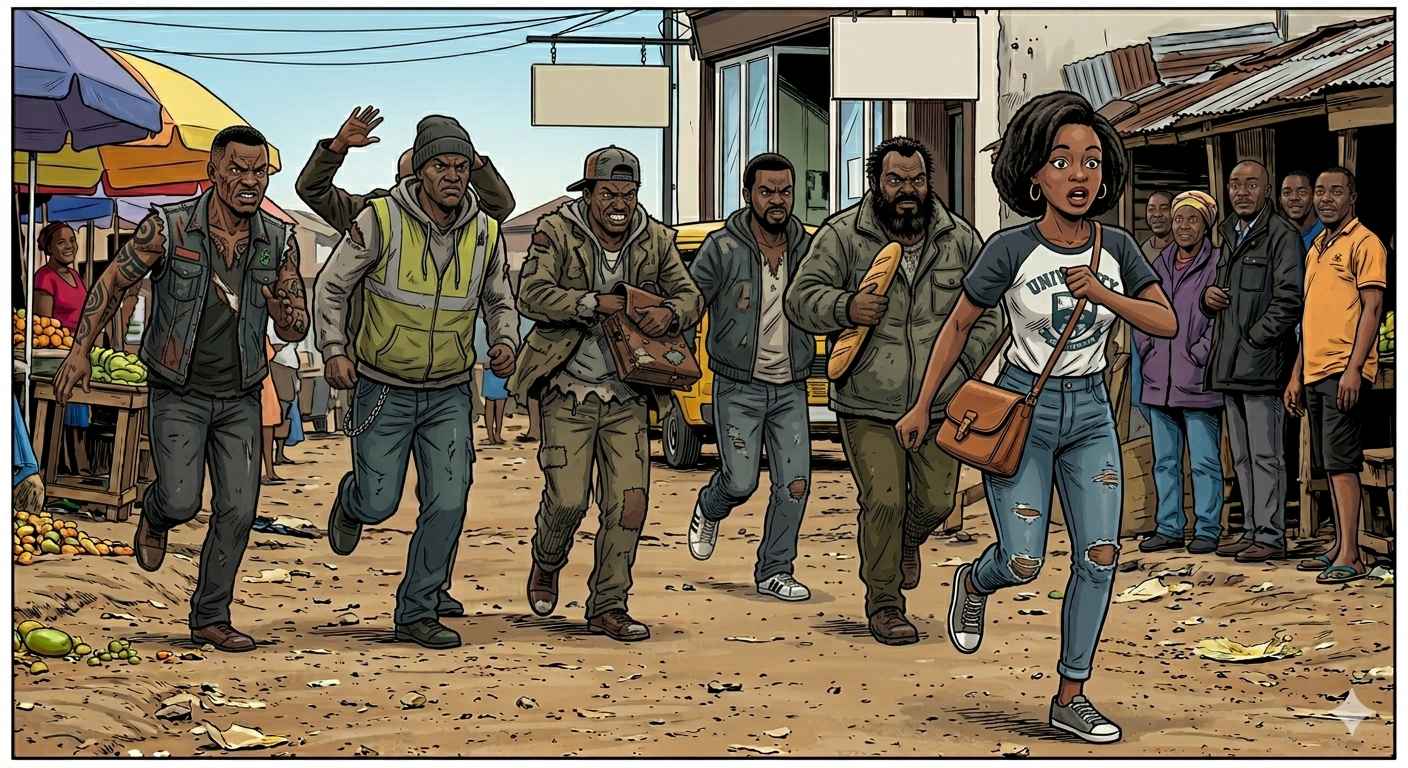
On March 19, 2026, in Ozoro, headquarters of Isoko North Local Government Area in Delta State, a crowd of men chased, stripped, and sexually assaulted women and female students in broad daylight during a traditional festival. Videos went viral showing a young woman being dragged from a motorcycle and assaulted, another fleeing as her dress was torn from her, another shielding herself from a mob. The incident ignited national outrage. Sixteen suspects were eventually arrested, the festival was banned, and the Delta State Government described the events as “barbaric, heinous and unacceptable.” First Lady Oluremi Tinubu condemned it. Human rights lawyers issued press releases. The internet raged, sobbed, and performed solidarity for approximately seventy-two hours. And then, as Nigeria always does, it moved on.
Here is the problem. We are treating Ozoro as though it is a rupture in an otherwise functioning social fabric. It is not. The Alue-Do festival incident is the fabric. It is Nigeria’s oldest, most consistent tradition, the one that predates every written constitution and outlasts every administration: the tradition of allowing ideology, culture, and communal belief to occupy the space where law and consequence should be. If you want to understand what happened in Ozoro, do not look at the men who were chasing women. Look at every Nigerian tradition that has chased women for decades, and ask yourself why we have only ever condemned the ones that got filmed.
Nigeria’s Long List of Traditions That We Decided Were Fine
Before we crown Ozoro as the nadir of Nigerian civilization, let us scroll through the archive. Because Nigeria has a rich and extensive portfolio of cultural practices that violate fundamental human rights, and most of them have been operating quietly and uninterrupted for decades, with the full cultural endorsement of communities, the tacit acceptance of state governments, and the ceremonial silence of a federal government that has decided that tradition is someone else’s jurisdiction.
Take widowhood rites. In parts of Igbo communities, a widowhood practice called Aja-Ani requires a widow, days after her husband’s funeral, to have non-consensual sexual intercourse with a priest or dwarf as a ritual to sever her spiritual bond with the deceased. Her consent is immaterial. The community insists. In Akwa Ibom, widows are confined to a single location for six weeks, forbidden to bathe or change clothes during the mourning period. Across multiple communities in southeastern Nigeria, widows are compelled to drink the water used to wash their dead husband’s corpse as proof of innocence, a test designed in the logic of accusation: you are already a suspect. Prove you did not kill him. By drinking this.
These are not ancient relics from the pre-colonial era, safely quarantined in museum glass. A 2025 Guardian Nigeria feature confirmed that widowhood rites involving head-shaving, sleeping on bare floors, isolation from society, and in extreme cases, forced consumption of corpse-washing water remain in active practice across Nigeria. These practices violate Section 34(1) of the 1999 Constitution, which guarantees every citizen’s right to dignity of person and protection from degrading treatment. They also violate Articles 5 and 21 of the African Charter on Human and Peoples’ Rights, to which Nigeria is a signatory. The law is clear. The state is quiet. The tradition continues.
And widowhood is only the start. In Northern Nigeria, child marriage remains a structural norm, with estimates suggesting that 70% of girls in some northern communities are married before age 18, and girls as young as 12 being betrothed to adult men under the combined authority of religious and cultural law. In southeastern communities, the Osu caste system, which categorizes certain people as permanent social outcasts and prohibits them from marrying into free-born families, persists despite being legally abolished during the colonial era. Human sacrifice, the ritualized killing of human beings to appease ancestral forces or acquire wealth, remains a documented and recurring phenomenon in Nigeria, particularly in election seasons when demand for ritual materials spikes. Across every geopolitical zone, women in certain communities are warned through WhatsApp broadcasts not to venture outside during certain festival days because tradition has designated those days as open season on female bodies. We have circulated these warnings so routinely that they have become a genre of community messaging, as normal as a reminder to pay electricity bills.
The question is not why did men run after women in Ozoro. The question is why we built an entire country where culture has more enforcement power than the constitution, and then pretended to be surprised when culture enforced itself.
Anuoluwa Soneye, NarrivonThe Ozoro incident is not more barbaric than a widow being compelled to drink corpse water. It is not more violent than a 12-year-old being married to a grown man. It is not more criminal than a human being killed for ritual purposes. The only difference is that Ozoro generated footage. And footage, in Nigeria, is the closest thing to a mandatory minimum sentence that this country has ever produced.
The State of Nature Is Not a Theory. It Is a Tuesday in Nigeria.
In 1651, the English philosopher Thomas Hobbes published Leviathan, his foundational argument for why human beings need organized government. His premise: without a sovereign authority that enforces the social contract, human life in its natural state degenerates into chaos, a war of all against all in which life becomes, in his famous phrase, “solitary, poor, nasty, brutish, and short.” The social contract, as Hobbes conceived it, is the agreement by which citizens surrender certain freedoms to the state in exchange for the state’s protection of their most basic rights: life, safety, and dignity.
“The condition of man is a condition of war of every one against every one. In such condition there is no place for industry, because the fruit thereof is uncertain: and consequently no culture of the earth; no knowledge of the face of the earth; no account of time; no arts; no letters; no society; and which is worst of all, continual fear, and danger of violent death.”
Thomas Hobbes, Leviathan, 1651
Nigeria has a constitution. It has a police force, a judiciary, an executive arm, and a legislature. It has, on paper, every institution that separates a governed society from Hobbes’s state of nature. What Nigeria lacks is the consistent, credible enforcement of consequences that makes those institutions real. When the state repeatedly fails to prosecute cultural violence, it does not merely fail its citizens. It communicates, loudly and clearly, that certain categories of crime are outside the social contract’s protection. That the contract applies to some people, in some circumstances, at some times. And that culture, tradition, and ideology are sovereign territories where the constitution does not hold jurisdiction.
Jean-Jacques Rousseau, Hobbes’s intellectual successor in social contract theory, argued that the corruption of civilization comes not from nature, but from institutions that normalize inequality and entrench power in the hands of the few. “Man is born free, and everywhere he is in chains,” Rousseau wrote in The Social Contract (1762). In Nigeria, the chains are not forged in steel. They are woven from tradition, religion, and a cultural consensus so old and so deeply embedded that they feel like gravity. They feel like the natural order of things. And that is precisely their danger.
“The law is reason, free from passion.”
Aristotle, Politics
Aristotle’s definition assumes a law that is actually applied. What happens in Nigeria is the inverse: passion, in the form of cultural conviction, religious fervor, and communal belief, is routinely freed from law. The Ozoro men were not lawless in a vacuum. They were lawless in a country that has spent decades proving to its citizens, through consistent non-enforcement, that certain kinds of violence carry no credible cost.
When the State Chose Religion Over a Life, and Nobody Went to Jail
If you want to understand the Ozoro festival, you must first understand what happened in Sokoto on May 12, 2022. Because Ozoro did not emerge from nowhere. It emerged from a country that had already learned, definitively, that ideological violence carries no enforceable penalty.
The Murder of Deborah Samuel Yakubu
Deborah Samuel Yakubu was a 25-year-old second-year Home Economics student who was stoned, beaten, and burned alive by fellow students after she sent a voice note to a WhatsApp group requesting that an academic platform not be used for religious content. Her killers filmed themselves committing the murder. One man was captured on video holding a matchbox, announcing that he had used it to set her on fire. The videos circulated widely. Two suspects were arrested. In January 2023, a Sokoto Chief Magistrate Court acquitted both suspects because police prosecutors failed to appear for repeated hearings. The court set them free. As of this writing, nobody has been sentenced for the murder of Deborah Samuel. Her family relocated. Her case is closed. Nigeria moved on.
Bashir Ahmad, former media aide to the late President Muhammadu Buhari, became one of the most controversial figures in the aftermath, when old tweets surfaced in which he had declared his support for the death penalty for blasphemy. Nigerians widely accused Bashir of celebrating or endorsing the killing. He denied it. Nothing happened. No investigation, no disciplinary process, no accountability for a former government official who appeared, in the eyes of many, to be publicly sympathetic to the ideological justification for a young woman’s murder.
Global Rights, in their press release, made the essential point: “The pattern of the government’s acquiescence to similar crimes through its complacent enablement of impunity has clearly been established.” They listed other precedents: Shuaibu Yohanna, a pastor killed in Kano in September 2021; Bridget Patience Agbahime, a 74-year-old street vendor beaten to death in Kano in June 2016 on blasphemy allegations; Methodus Chimaije Emmanuel, a 24-year-old killed in Niger State in 2016 on the same charge. All of them killed. None of the killers imprisoned. The pattern is not incidental. It is instructional.
The instruction is this: in Nigeria, if you frame your violence as cultural or religious, the state will arrest two people, fail to prosecute them, acquit them on a procedural technicality, and allocate your atrocity to the permanent archive of things we condemn on social media and then forget. The Ozoro men were not acting irrationally. They were acting on the accumulated evidence of four decades of Nigerian jurisprudence as it is actually practiced, not as it is written.
How Turning Every Social Crisis Into a Gender War Guarantees We Never Fix Anything
By the evening of March 19, 2026, Twitter/X had become a war zone. Not between Nigerians and the men who assaulted women in Ozoro. Between Nigerian men and Nigerian women. The familiar army of “not all men” defenders mobilized. The equally familiar army of “men are the problem” absolutists counter-mobilized. Within twelve hours, the conversation had pivoted from “how do we criminalize cultural violence?” to “who is more morally depraved, men or women?” This is, unfortunately, exactly how these conversations always go in Nigeria. And it is exactly why nothing ever changes.
Let us be precise about what happened in Ozoro, because precision matters when an entire nation’s social discourse is at stake. A group of men committed sexual assault during a festival. This is a fact. It is a crime. The perpetrators deserve prosecution and severe sentencing. Also a fact: the ideological substrate that produced those men is not the Y chromosome. It is indoctrination. It is a community that normalized male entitlement to female bodies under the cover of tradition. It is a state that for years failed to attach meaningful consequences to such entitlement. It is an upbringing in which young men were taught, through cultural osmosis, that during this festival, certain behaviors are permitted.
“Violence is not a male problem or a female problem. It is a human problem, shaped by ideology, power and the presence or absence of accountability. When we gender the problem, we halve the solution.”
bell hooks, The Will to Change: Men, Masculinity and Love, 2004
This is not a defense of the men of Ozoro. It is an argument for actually defeating them. Because here is the uncomfortable truth that the gender war consistently obscures: the same traditions that have oppressed Nigerian women for centuries were, in many cases, designed, enforced, and perpetuated by other women. The Umuada, the patrilineal daughters-in-law who enforce widowhood rites on fellow women, are themselves women. The Aja-Ani ritual in some Igbo communities is carried out with the insistence of female community members. Child marriages in the north are frequently arranged with the active participation of mothers, aunts, and grandmothers who were themselves married young and understand this as love. History provides no shortage of examples of women wielding structural violence against other women in defense of a system that also oppresses them. This is not an indictment of women. It is a portrait of how ideology works. It does not care about your gender. It only asks for your compliance.
When we reduce Ozoro to “men are evil,” we lose the analysis. We lose the question of what ideology produced those men. We lose the interrogation of what parenting, community structure, and state failure built the room in which this became possible. And we guarantee that the next festival, in the next community, with the next mob, will be met with another round of Twitter outrage, another batch of arrests that go nowhere, and another cycle of gender recrimination that produces exactly zero structural change.
A country cannot fight against the Ozoro festival while tolerating every other barbaric tradition that precedes it. Either all of it is criminal, or none of it is. Pick one and legislate accordingly.
Anuoluwa Soneye, NarrivonWhat a Sane Country Would Actually Do
The Delta State Government has banned the Alue-Do festival. This is the correct first step and also, historically, approximately as far as Nigeria ever gets. Let us talk about what a country serious about this problem would actually do next.
First: comprehensive criminalization. Every cultural practice that violates a constitutional right must be designated a criminal offence with mandatory minimum sentences. Not aspirational guidelines. Not cultural sensitization workshops. Criminal offences. The forced drinking of corpse-washing water by a widow should carry a sentence equivalent to assault, because it is assault. Compulsory sexual intercourse as part of a widowhood rite is rape, regardless of who orders it or which tradition demands it. Child marriage is statutory rape and kidnapping. Property disinheritance of widows by in-laws is theft. These things already violate existing law in theory. The problem is that they are not prosecuted as such in practice. Making the criminalization explicit, mandatory, and nationally publicized changes the calculus for communities that currently perceive these practices as legally safe.
Second: deterrence through severity. Legal practitioner Rockson Igelige captured it correctly: “Condemnation alone is insufficient.” The sentences attached to cultural violence must be severe enough to function as genuine deterrents. When communities know that organizing a festival in which women are assaulted will result in the organizer spending fifteen years in prison rather than spending three weeks in police custody before being quietly released, the festival stops being organized. Severity of consequence is not cruelty. In the absence of ideological reform, which takes generations, it is the only mechanism that changes behavior in the short term.
Third: proactive state responsibility. The police spokesperson admitted that the festival organizers did not inform the traditional ruler, the students’ union, or the police. This is presented as mitigation. It should be presented as a structural failure. The police should not be waiting to be informed about cultural events in their jurisdiction. They should have intelligence frameworks that identify culturally sensitive dates across all communities in their operational area and deploy presence proactively. The fact that female students of Southern Delta University were assaulted in their immediate vicinity while no officer was present until social media forced a response is not a gap in communication. It is a failure of governance.
“Where justice is denied, where poverty is enforced, where ignorance prevails, and where any one class is made to feel that society is an organized conspiracy to oppress, rob and degrade them, neither persons nor property will be safe.”
Frederick Douglass, speech, April 1886
Fourth and most critically: ideological clarity. Nigeria must decide, as a nation and not merely as a government, that the constitution is the supreme document. Not because it was written by a committee, but because it is the only document in this country that protects every citizen regardless of gender, ethnicity, religion, or community membership. Every cultural practice that conflicts with it is not a heritage to be preserved. It is a liability to be legislated against. This is not cultural imperialism. It is the basic social contract. You do not get to run a country on the terms of a constitution while simultaneously granting cultural traditions the right to override it. Choose one. Nigeria has been refusing to choose for sixty-six years. The bodies keep accumulating.
This Is Not About Ozoro. It Has Never Been About Ozoro.
Deborah Samuel deserved justice. She got a procedural acquittal. The widows in Enugu communities who drink corpse water deserve the protection of the law. They get cultural silence. The 12-year-old girls in Jigawa who are married to men four times their age deserve the intervention of a functional state. They get statistics in reports that nobody reads. The women in Ozoro who were chased and assaulted in broad daylight deserve prosecution of their perpetrators. They got condemnations from the First Lady.
We are not a poor country that cannot afford justice. We are a rich country that has decided, through consistent prioritization, that justice is a luxury item for selected categories of crime. We have functional EFCC operations when a politician’s money is at stake. We do not have functional prosecutions when a woman’s body is at stake. These are not resource failures. They are political choices, repeated so many times that they have calcified into national character.
“A nation’s greatness is measured by how it treats its weakest members.”
Mahatma Gandhi, widely attributed
The path to a genuinely different Nigeria is not a gender war. It is not a social media outrage cycle. It is not a condemnation statement from Aso Rock. It is, specifically and only, the decision to build a country in which ideology, culture, and tradition cannot purchase exemption from consequence. Where a man who assaults a woman during a festival faces the same credible legal reckoning as a man who steals from the federal treasury. Where a community that enforces widow rape faces the same public prosecution as a community that harbors armed bandits. Where the law means the same thing in Ozoro as it does in Abuja, as it does in Sokoto, as it does in Nnewi.
To get that country, Nigerians must first be ideologically correct about what this is. It is not a man problem. It is not a gender problem. It is a lawlessness problem. It is a consequences problem. It is a problem of a state that has repeatedly told its citizens, through a hundred Deborah Samuels and a thousand widowhood rites and now one Ozoro festival, that the social contract is optional, that the constitution is decorative, and that the only law that truly governs Nigeria is the one that has always governed it: the law of whoever holds the whip.
Until we are willing to say that clearly, and mean it legislatively, nothing that happened in Ozoro on March 19, 2026 will be the last time.
Frequently Asked Questions
What happened at the Ozoro Alue-Do festival in Delta State?
On March 19, 2026, during the Alue-Do traditional fertility festival in Ozoro, Isoko North LGA, Delta State, mobs of men chased, stripped, and sexually assaulted women and female students in broad daylight. Videos went viral on social media triggering national outrage. Sixteen suspects were arrested including chief organizer Omorede Sunday. The festival has been banned by the Delta State Government.
Is the Ozoro Alue-Do festival the first time Nigerian culture violated women’s rights?
No. Nigeria has a long-documented history of cultural practices that violate women’s fundamental rights, including widowhood rites compelling widows to drink corpse-washing water, property inheritance customs stripping widows of assets, child marriage in Northern Nigeria, and non-consensual sexual rites in some Igbo communities. These coexist with a constitution that theoretically prohibits them.
What happened to the killers of Deborah Samuel in Nigeria?
Deborah Samuel Yakubu was lynched and burned alive at Shehu Shagari College of Education in Sokoto on May 12, 2022. Two suspects were arrested but acquitted in January 2023 by a Chief Magistrate Court due to the non-appearance of police prosecutors. As of 2026, nobody has been prosecuted or sentenced for the murder.
Why does culture override the law in Nigeria?
In Nigeria, cultural and religious ideologies consistently override constitutional law because the state has historically failed to enforce consequences for violations. When perpetrators of culturally-framed violence face no prosecution, the unspoken message is that tradition outranks the constitution. This is a structural failure of governance, not merely a cultural problem.
What is Thomas Hobbes’ state of nature and how does it apply to Nigeria?
Thomas Hobbes argued in Leviathan (1651) that without a social contract enforced by a sovereign, human life degenerates into a war of all against all. Nigeria has the constitutional framework of the social contract but consistently fails to enforce it, allowing cultural violence to operate without consequence. The result is a de facto Hobbesian state of nature operating beneath a constitutional facade.
Sources and Further Reading:
Women stripped, sexually assaulted during Delta festival (The Punch, March 2026) •
Delta community leaders react to Alue-Do festival (TheCable, March 2026) •
Ozoro: Police dismiss rape festival claim (Channels TV, March 2026) •
Lawyer demands Ozoro festival ban (SaharaReporters, March 2026) •
What is happening in Ozoro (Marie Claire Nigeria, March 2026) •
Lynching of Deborah Samuel Yakubu (Wikipedia) •
Suspects in Deborah Samuel case acquitted (PSJ UK) •
Press release on Deborah Samuel lynching (Global Rights) •
Widowhood rites or human rights (AWJAI, 2025) •
What it is like to be a widow in Africa (Ms. Magazine) •
Widowhood practices in Nigeria (Rights of Equality) •
Controversial cultural practices in Nigeria (Guardian Nigeria, June 2025)
Leave a Reply