
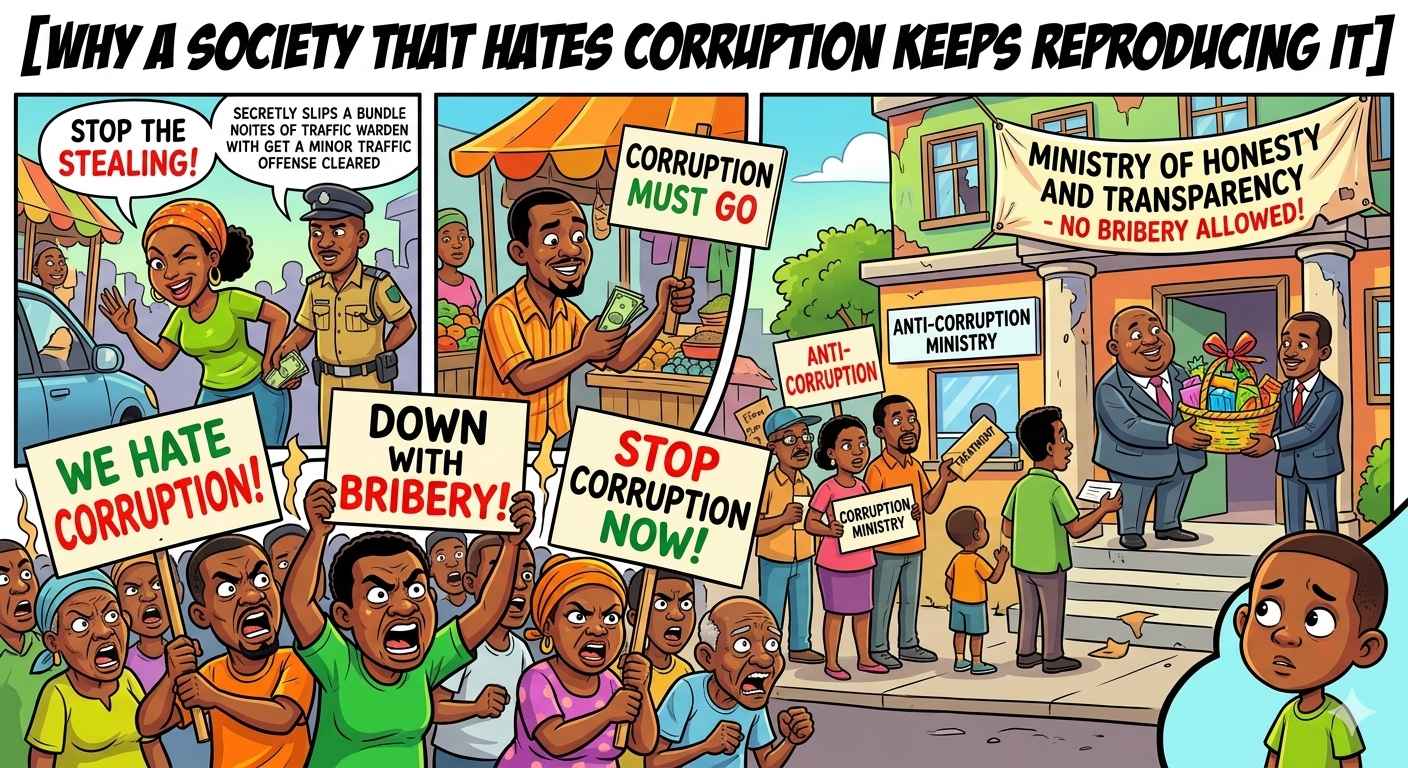
The Psychology of Corruption in Nigeria: Why a Society That Hates Corruption Reproduces It
Nigeria runs one of the most interesting political experiments on the planet. The country hates corruption. Nigerians complain about it daily. Radio shows debate it. Social media explodes about it. Religious leaders condemn it every Sunday. Yet corruption continues to thrive. The cue is “what really is the psychology of corruption in Nigeria”
Transparency International ranked Nigeria 142nd out of 182 Countries in the 2025 Corruption Perceptions Index, placing it among countries struggling with deep institutional corruption.
At first glance, the explanation appears simple. Many assume Nigeria’s corruption problem begins and ends with politicians. However, the truth runs deeper. Nigeria’s corruption problem sits inside the psychology of its people.The political class simply reflects the moral environment that produces it.
Nigerian politicians did not fall from the sky. They grew out of Nigerian streets, Nigerian churches, Nigerian universities, Nigerian marketplaces, and Nigerian homes.This uncomfortable reality forces a difficult question.
Does the average Nigerian truly reject corruption, or do they simply resent not having access to it?
Worship of Money in Nigeria: The Most Successful Religion
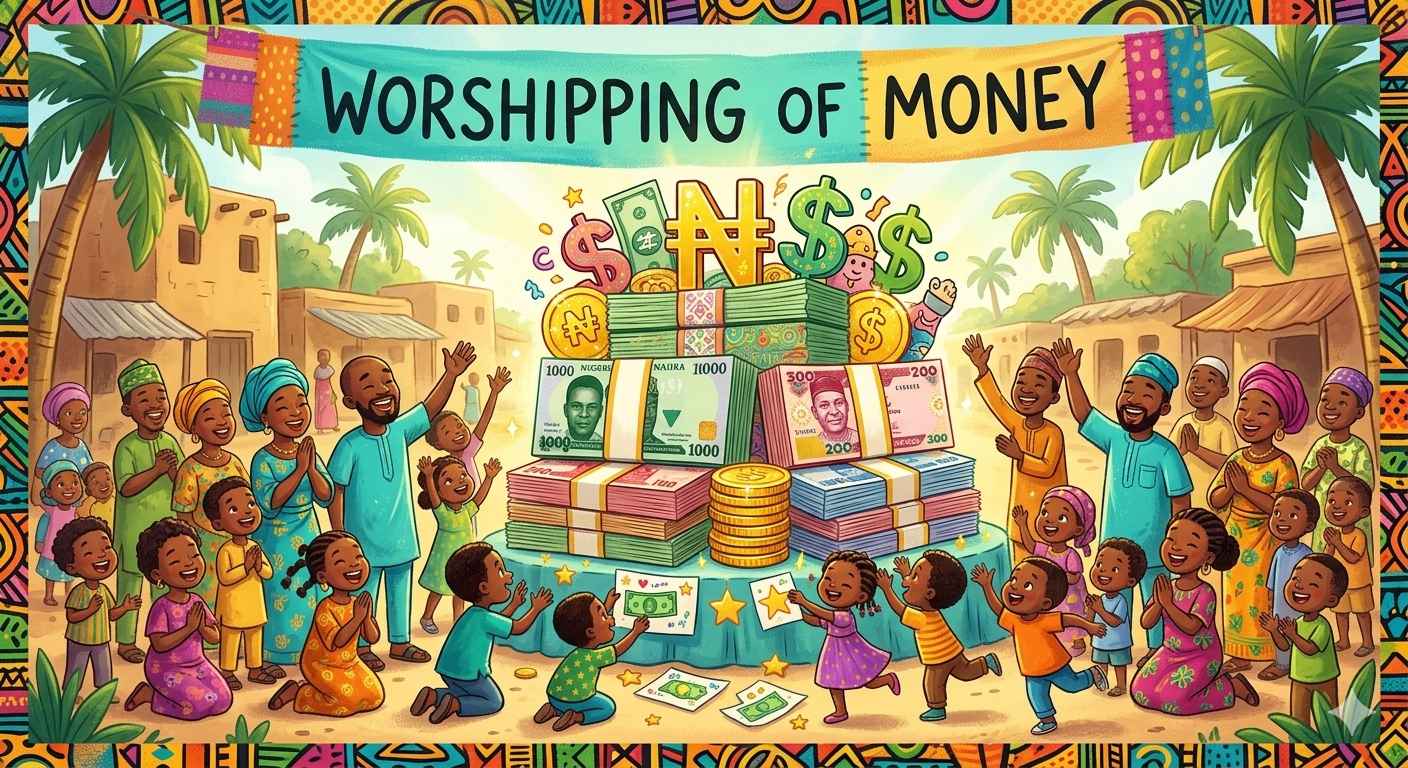
Nigeria is a deeply religious country. Churches dominate city skylines. Mosques fill neighborhoods with prayer calls. Religious leaders command enormous influence. Yet another belief system quietly dominates public life. The worship of money.
Success in Nigeria rarely requires explanation. Wealth automatically confers respect. Questions rarely follow. A man driving a ₦200 million car through Lagos rarely faces interrogation about how he obtained the money. He receives admiration.
The popular Nigerian artiste, Davido sang a song title FIA, which summarized the system perfectly in a viral phrase that circulates widely across social media.
“If you no get money, hide your face”
The statement sounds humorous. The implications are profound.
Money in Nigeria frequently erases moral scrutiny.
This cultural reality weakens the public appetite for accountability.
Citizens struggle to condemn corruption when wealth itself has become the ultimate proof of success.
The Oppressed Dream of Becoming the Oppressor
Political theorists have long warned about this psychological trap.
Brazilian philosopher Paulo Freire, author of Pedagogy of the Oppressed, described a dangerous social condition.
Nigeria often mirrors this pattern. Many citizens do not necessarily reject corruption. They reject being excluded from it.
A common phrase circulates casually in Nigerian political conversations. “Make I chop my own.” The phrase translates loosely into English as “Let me take my share.”
The language reveals a deeper mindset. Public office in Nigeria frequently appears less like a position of service and more like a financial opportunity. This belief does not exist only among politicians. It exists among ordinary citizens.
Taxi drivers say it. University students say it. Traders say it.
If corruption is a crime, many Nigerians see it as a crime they would happily commit if the opportunity appeared. This mindset produces a devastating outcome. Citizens rarely demand accountability from leaders whose behavior reflects their own aspirations.
Small Corruption: The Training Ground for Big Corruption
Large corruption scandals dominate headlines. Yet the real psychological foundation of corruption begins much earlier. It begins with small corruption.
Market sellers quietly manipulate measurements. Civil servants demand unofficial payments before processing paperwork. Traffic officers expect “settlement” during roadside stops.
Many Nigerians encounter these experiences daily. Each incident appears minor in isolation. Together they build a national culture.
Small corruption becomes normal. Over time, moral resistance disappears. Political corruption then becomes easier to tolerate because citizens already participate in smaller versions of the same behavior.
Nigeria’s Youth and the Economy of Hustle
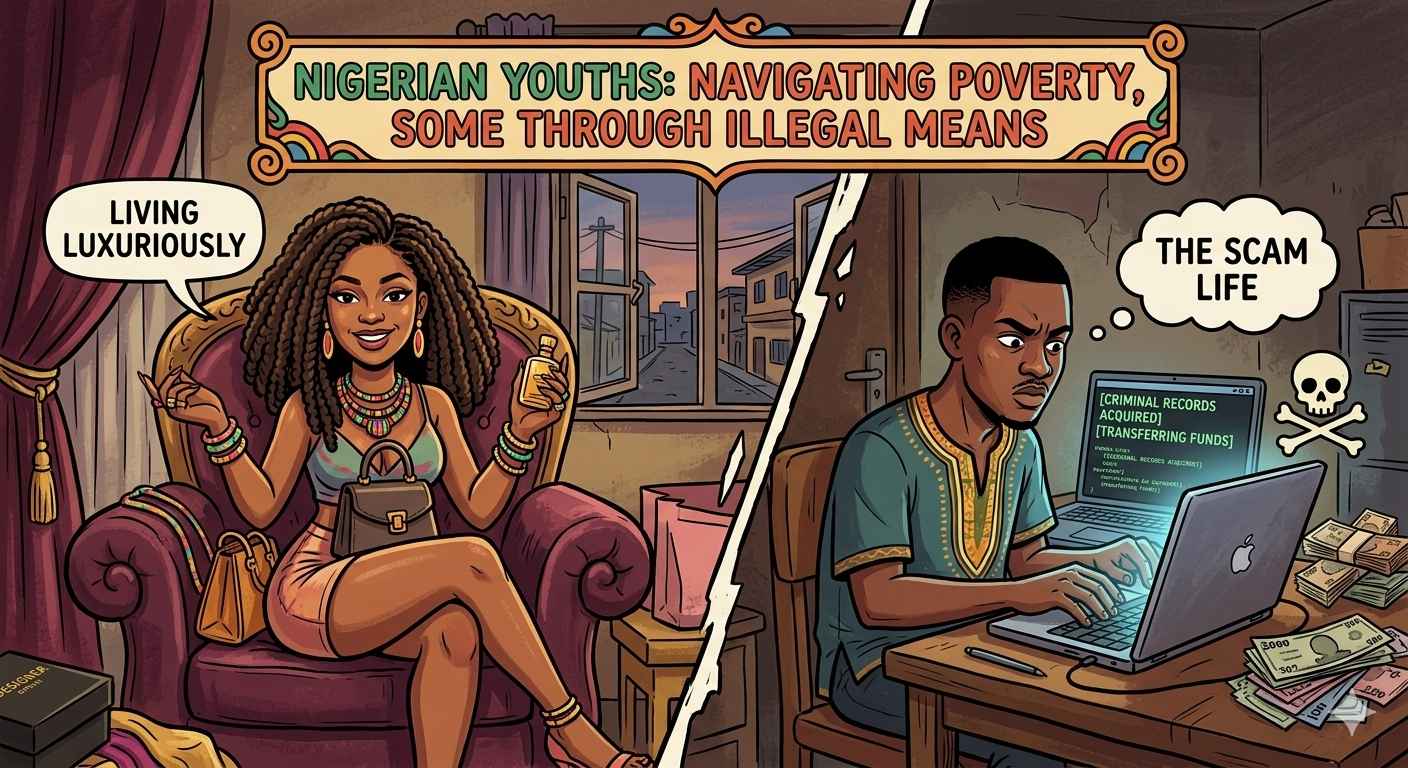
Nigeria’s youth population faces immense economic pressure.
The country’s unemployment rate among young people remains high. Economic instability drives desperation.
Many young Nigerians respond with extraordinary creativity and resilience. Others turn to morally questionable survival strategies.
Two industries illustrate the problem clearly. Internet fraud, commonly called “Yahoo Yahoo,” has become a global phenomenon associated with Nigerian cybercrime networks.
The United States Federal Bureau of Investigation regularly reports Nigerian involvement in online fraud operations. One of the most notorious figures linked to cybercrime networks was Ramon Abbas, widely known as Hushpuppi.
Hushpuppi gained international attention through Instagram displays of extreme wealth before his arrest in Dubai in 2020. He later pleaded guilty in the United States to conspiracy to commit money laundering.
The second trend involves what Nigerians commonly call “hook-up” The phrase describes transactional relationships where young women trade sex for financial support. Many participants justify the practice as economic survival.
Both trends reflect a deeper social reality. The pursuit of money often overrides ethical boundaries.
The same moral framework later appears in politics. Young Nigerians raised in an environment where wealth equals success often carry that belief into positions of authority later in life.
Nepotism Rebranded as “Connection”
Nigeria rarely describes corruption using the word corruption. The culture has invented friendlier language.
These linguistic tricks normalize unethical behavior.
A job secured through family influence rarely triggers criticism. Instead, it becomes a story of blessing. This mindset appears frequently in Nigerian politics.
Appointments to government positions often follow ethnic, regional, or religious lines.
Competence becomes secondary. Loyalty becomes primary.
Loyalty Over Competence: Nigeria’s Electoral Psychology
Few forces shape Nigerian politics more strongly than identity. Ethnicity remains a powerful political driver.
The country contains three major ethnic groups:
Voting patterns frequently follow these identities. Many Nigerians prioritize ethnic loyalty over policy competence.
A candidate may face credible allegations of financial misconduct. If he belongs to the voter’s ethnic group, many voters defend him.
A candidate from another region may present stronger policies and credentials.
Many voters still reject him purely based on identity. This pattern appeared clearly during the 2023 Nigerian presidential election.
The election featured three major candidates:
Ethnic and regional loyalties strongly influenced political discourse throughout the campaign. The result revealed a difficult truth. Many Nigerian voters treat elections less like policy choices and more like identity contests.
The Political Class Understands the Game
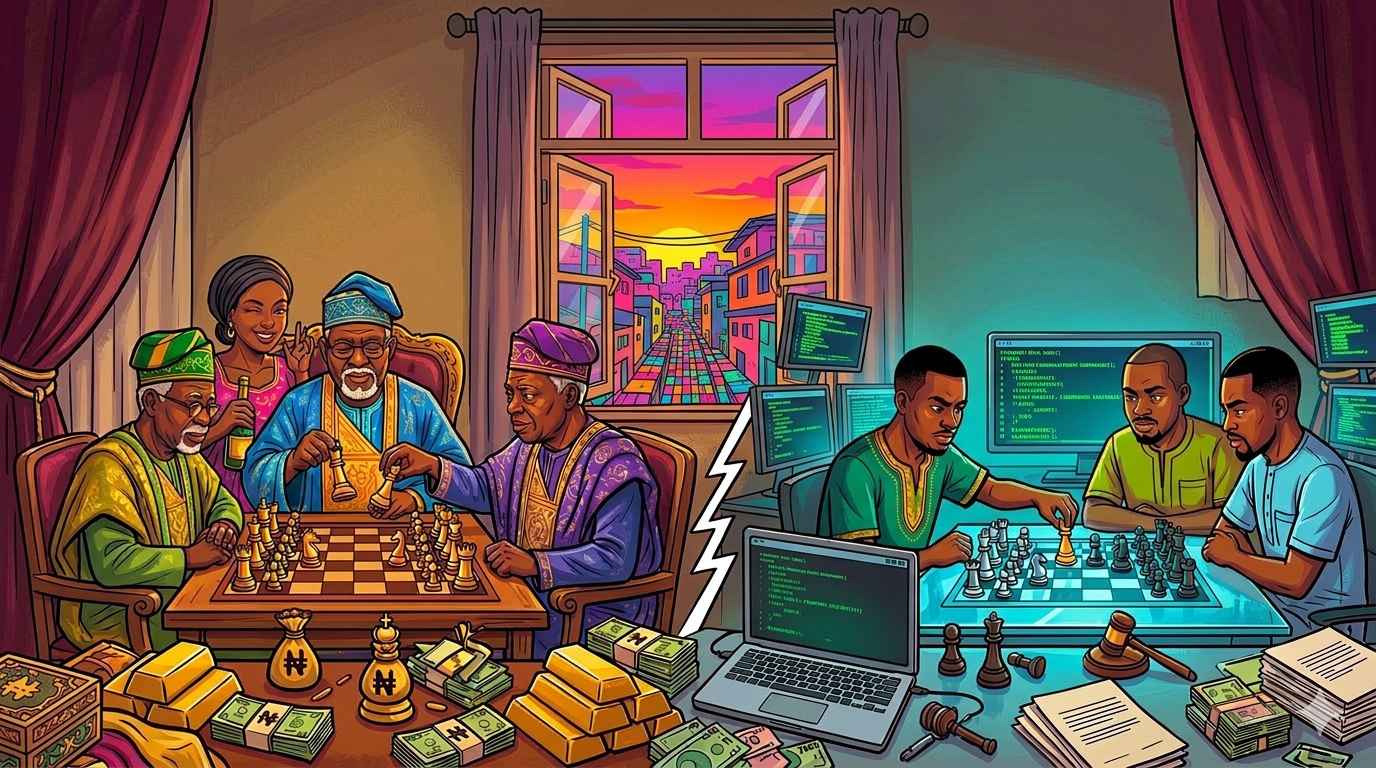
Nigerian politicians understand this psychology extremely well.
They operate inside it.
Former Governor James Ibori of Delta State, once convicted in the United Kingdom for money laundering, remained politically influential long after his legal troubles.
Former Petroleum Minister Diezani Alison-Madueke, investigated internationally for alleged corruption involving oil revenues, maintained significant political connections for years.
These cases demonstrate an important political lesson. Public scandals rarely end Nigerian political careers completely. The system often forgives. Sometimes the public forgets.
The Mirror Problem: Why Many Nigerians Stay Silent
Observers often ask why Nigerians tolerate corruption. Fear explains part of the silence. Another explanation exists. Recognition.
Many citizens see their own moral compromises reflected in the behavior of leaders. Condemning corruption too strongly risks confronting personal hypocrisy.
A civil servant who accepts bribes struggles to criticize a minister who steals millions.
The scale differs. The principle remains identical. This mirror effect weakens public outrage.
The Tribal Shield: Ethnicity as a Political Protection System
Nigeria’s corruption problem does not operate in a vacuum. It thrives inside a political culture where ethnic loyalty frequently overrides moral judgment. The country’s political landscape is dominated by three major ethnic blocs:
Each group has produced powerful political figures and national leaders. In theory, democracy should allow voters to evaluate leaders based on performance and integrity.
In practice, Nigerian elections often resemble ethnic census competitions. A politician facing credible allegations of financial misconduct can still enjoy enormous support if voters believe he represents their regional interest.
A rival candidate may present stronger policies and a cleaner reputation. Many voters reject him immediately if he belongs to a different ethnic group. The pattern repeats across multiple election cycles.
During the 2023 presidential election, political debate across Nigeria frequently followed ethnic and regional lines as candidates sought support from their core regional bases.
The consequences are severe:
Online Armies and the Digital Defense of Corruption
Nigeria’s political battlefield has expanded dramatically with social media. Platforms like Twitter (now X), Facebook, and TikTok host thousands of political debates every day.
These debates rarely focus on policy. They focus on defending political personalities. Digital supporters form aggressive online communities that defend their preferred politicians regardless of evidence.
Investigative reports trigger online warfare. Facts become secondary. Political loyalty becomes absolute. This environment creates a strange outcome.
Citizens who should demand accountability instead act as public relations officers for political elites.
The Case of James Ibori: When Corruption Meets Political Loyalty
Few corruption cases illustrate Nigeria’s complex relationship with accountability better than James Ibori, former governor of Delta State.
Ibori served as governor from 1999 to 2007. In 2012, a British court sentenced him to 13 years in prison for fraud and money laundering connected to millions of pounds stolen during his time in office.
Investigators estimated that the financial crimes involved tens of millions of pounds taken from public funds meant for development.
The case represented one of the most significant corruption prosecutions involving a Nigerian political figure. Yet the reaction inside Nigeria revealed something fascinating.
Many supporters continued to defend him. Some celebrated him upon his return to Nigeria after serving his sentence abroad.
The story exposed a disturbing cultural reality. For many Nigerians, political loyalty often outweighs ethical judgment.
Oil Wealth and Political Corruption
Nigeria is Africa’s largest oil producer. In theory, this wealth should translate into strong infrastructure, reliable electricity, and well-funded public institutions. Reality tells a different story.
Corruption within Nigeria’s oil sector has remained a major subject of international investigations for decades. One prominent example involves Diezani Alison-Madueke, former Minister of Petroleum Resources and former president of OPEC.
She served as Nigeria’s oil minister between 2010 and 2015.
British prosecutors allege that she accepted luxury gifts, expensive properties, and other benefits from individuals seeking oil contracts with Nigerian state institutions.
Alison-Madueke denies the charges. Regardless of the final outcome, the case illustrates a recurring theme.
Nigeria’s oil wealth often becomes a magnet for corruption allegations involving political elites.
The Poverty Factor: Corruption and Economic Desperation Among Nigerians
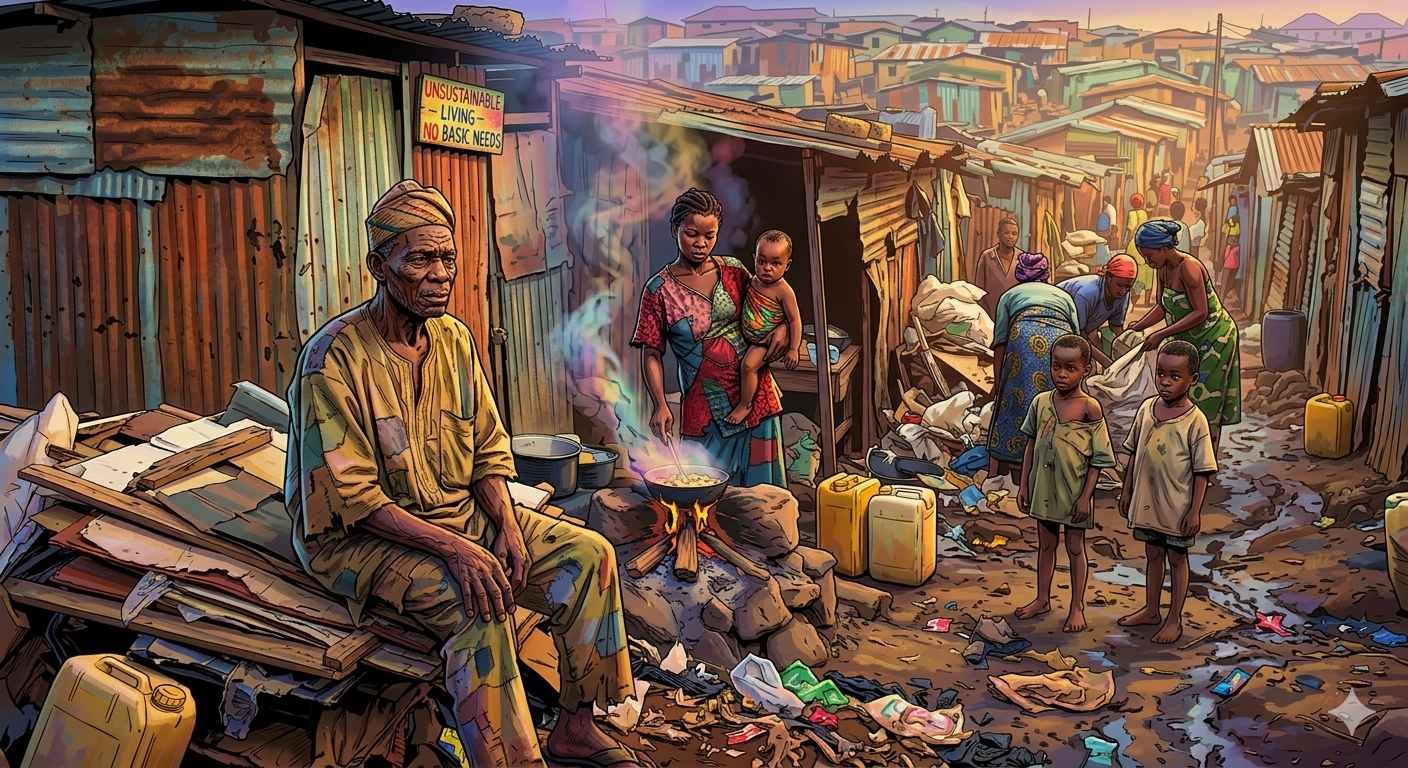
Understanding corruption in Nigeria requires confronting another harsh reality. Poverty.
More than half of Nigerians live below the poverty line according to recent research from international policy institutions.
Economic hardship reshapes moral decisions. Citizens struggling to survive often prioritize immediate financial opportunity over ethical considerations.
This environment produces a survival mindset.
For many young Nigerians, the choice appears brutally simple. Struggle honestly or succeed quickly.
The Rise of Yahoo Yahoo
One of the most visible expressions of this survival mentality appears in the rise of internet fraud networks popularly known as Yahoo Yahoo.
These fraud networks target victims globally through romance scams, investment fraud, and email deception schemes. Investigations into the subculture show that many participants see online fraud as a pathway out of poverty rather than a criminal enterprise.
The phenomenon has become so widespread that the term “Yahoo Boy” has entered everyday Nigerian vocabulary. Some musicians glorify the lifestyle. Social media influencers celebrate the wealth.
The message spreads quietly: that success matters more than integrity.
Corruption in Nigeria as a National Feedback Loop
Nigeria’s corruption problem does not operate as a one-way street from politicians to citizens. The relationship works both ways.
Citizens tolerate corruption because they see themselves reflected in it. Politicians exploit corruption because they know citizens tolerate it.
This creates a feedback loop. Small corruption feeds large corruption. Large corruption normalizes small corruption.
The cycle continues.
International analysts often describe this dynamic as a culture of impunity, where individuals believe corrupt actions will rarely produce serious consequences.
Once that belief becomes widespread, corruption evolves from a risk into a strategy.
Global Thinkers Who Warned About This
History contains many warnings about societies that normalize corruption.
British historian Lord Acton famously wrote:
American political thinker Thomas Jefferson offered another warning:
Philosopher Hannah Arendt, who studied political power extensively, wrote something equally relevant:
Nigeria’s corruption crisis reflects each of these insights.
The Moral Crisis Behind the Political Crisis
Nigeria’s corruption problem is not only political. It is cultural. The political class represents the visible symptoms. The deeper problem lies within societal values.
When wealth becomes the highest moral achievement, corruption becomes inevitable. When ethnic loyalty outweighs national interest, accountability becomes difficult.
When citizens dream of benefiting from corruption rather than eliminating it, reform becomes nearly impossible.
The Hard Truth: Nigeria’s Leaders Reflect Its Society
Many Nigerians prefer a simple explanation for corruption. Blame the politicians.
The explanation contains truth. Politicians carry enormous responsibility for the country’s governance failures. Yet the story does not end there.
Nigeria’s leaders emerge from Nigerian society. They absorb the same cultural values. They operate within the same moral environment.
If society celebrates wealth without questioning its origin, politicians will behave accordingly. If voters reward ethnic loyalty over competence, politicians will exploit it.
If citizens remain silent when corruption occurs, leaders will assume silence equals approval.
The Only Way Forward for the Liberation of Nigeria
Solving corruption in Nigeria requires more than replacing political leaders. The country needs a deeper transformation.
Three changes are essential.
Nigeria possesses extraordinary talent, creativity, and energy. The country’s future depends on whether those strengths can overcome a culture that currently tolerates corruption.
Final Reflection
The psychology of corruption in Nigeria reveals a difficult truth. The system survives because too many people quietly accept it.
Many do not truly hate corruption. They hate being excluded from it.
Until that mindset changes, corruption will continue to reproduce itself across generations.
Political reform may change the players. Cultural reform will change the game.
Leave a Reply